"Divine Supervision Required: Protecting the Loom in Classical and Hellenistic Sicily"
Dr. Randall Souza, Duquesne University
Co-sponsored by the Archaeological Institute of America, Pittsburgh Society
4:30 PM, 1700 Wesley Posvar Hall
"Divine Supervision Required: Protecting the Loom in Classical and Hellenistic Sicily"
Dr. Randall Souza, Duquesne University
Co-sponsored by the Archaeological Institute of America, Pittsburgh Society
4:30 PM, 1700 Wesley Posvar Hall
Dr. Dadush delivers the Graduate Student Conference's Keynote Address.
Verity J. Platt
Associate Professor, Cornell University, Department of Classics
“Matter in Mind: Graeco-Roman Painting between Production and Perception”
Focusing on Pliny's Natural History, this paper explores a series of anecdotes relating to the fourth century BC painter Protogenes of Rhodes. As verbal attempts to re-trace an artist’s specific entanglement with, approximation, and even transformation of the physical world, these episodes are informed by specific models of perception, cognition and representation. Drawing upon the materialist Stoic cosmology that informs Pliny's broader project, the Protogenes anecdotes are, I argue, especially concerned with the relationship between animus and res, or 'mind' and 'matter'. As such, they might be understood as paradigmatic explorations of the limits of the object - in terms of artistic technique, human perception, mimetic potential and physical corporeality.
Friday, March 27, 2015
4:00 p.m.
208A Cathedral of Learning
Dr. Thomson’s workshop will focus on practical tips to find primary, stakeholder, academic and news-type information. Attendees will receive access to a comprehensive PowerPoint guide to conducting research on Europe. Pre-Registration is required by emailing euce@pitt.edu.
The Europe: East and West Undergraduate Research Symposium is an annual event designed to provide undergraduate students, from the University of Pittsburgh and other colleges and universities, with advanced research experiences and opportunities to develop presentation skills. The event is open to undergraduates from all majors and institutions who have written a research paper from a social science, humanities, or business perspective focusing on the study of Eastern, Western, or Central Europe, the European Union, Russia, or other countries of the former Soviet Union. Selected participants give 10- to 15-minute presentations based on their research to panels of faculty and graduate students. The presentations are open to the public.
In 2005 Mark Leonard postulated, "Why Europe Will Run the 21st Century.” Ten years later, the EU has seen the rejection of European Treaty, stalled enlargement, the inability of European soft power to affect the Arab spring, a weak response to Russian dismantling of Georgia and Ukraine, and the Eurozone crisis. The rise of nationalist parties threatens the very integrity of the Union. In contrast, the ECB has responded to the crisis with concerted action, Croatia joined the Union as the 28th member, and the final institutional changes of the Lisbon Treaty are taking effect. After such a tumultuous decade, is there still cause for optimism regarding the European project? The Organizing Committee of the Tenth Annual Graduate Student Conference on the European Union welcomes submissions from all disciplines and topics including, but not limited to, EU politics, governance, economics, history, security studies, institutions and behavior studies, as well as policy, enlargement, immigration, development, trade, and foreign policy. Papers addressing the theme of the conference will receive special consideration.
The University Library System at the University of Pittsburgh houses one of the largest and most complete archives of primary and secondary documents on the European Union, dating back to the beginnings of the European Coal and Steel Community. Conference presenters are given access to the archive for research during their stay.
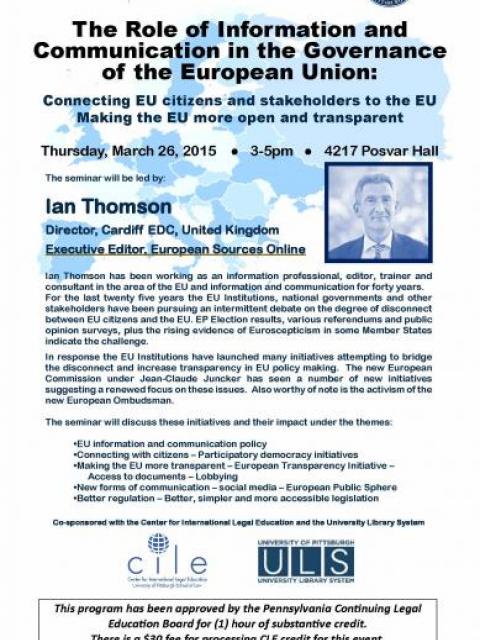
Ian Thomson has been working as an information professional, editor, trainer and consultant in the area of the EU and information and communication for forty years.
For the last twenty five years the EU Institutions, national governments and other stakeholders have been pursuing an intermittent debate on the degree of disconnect between EU citizens and the EU. EP Election results, various referendums and public opinion surveys, plus the rising evidence of Euroscepticism in some Member States indicate the challenge.
In response the EU Institutions have launched many initiatives attempting to bridge the disconnect and increase transparency in EU policy making. The new European Commission under Jean-Claude Juncker has seen a number of new initiatives suggesting a renewed focus on these issues. Also worthy of note is the activism of the new European Ombudsman.
The seminar will discuss these initiatives and their impact under the themes:
•EU information and communication policy
•Connecting with citizens – Participatory democracy initiatives
•Making the EU more transparent – European Transparency Initiative –
Access to documents – Lobbying
•New forms of communication – social media – European Public Sphere
•Better regulation – Better, simpler and more accessible legislation
Co-sponsored with the Center for International Legal Education and the University Library System
Ana Escrogima, a Foreign Service Officer currently serving as the Diplomat in Residence at City College of New York, will hold an information session to talk about the State Department’s internship program, her career experiences and employment opportunities in International Affairs through the Department of State. Prior to this assignment, she was the Deputy Director for Syria in the Bureau of Near Eastern Affairs at the Department of State, where she advised senior State Department leadership and managed an experienced team of Foreign Service and Civil Service Officers. In her overseas assignments, Ana was an Arabic language Spokesperson at the State Department's Regional Media Hub in Dubai, where she represented the U.S. government regularly on news and political shows on Arabic television, radio and online. If you have questions about this event, please contact Steve Lund, Assistant Director of the European Studies Center, at slund@pitt.edu or 412-648-7422.
THURSDAY, MARCH 26, 12:30 p.m.
Colloquium: "What Was Scientific Connoisseurship? Giovanni Morelli, Cultural Patrimony, and Art Attirbution in the Nineteenth and Twentieth Centuryies." With responses by David Marshall (Communication) and Terry Smith (History of Art and Architecture)
WEDNESDAY, MARCH 25, 6:00 p.m.
Cultural Studies Core Seminar: A discussion on John Brewer's "Microhistory and the Histories of Everyday Life" and "Closeness and Distance in the Age of Enlightenment"
TUESDAY, MARCH 24, 5:00 p.m.
Lecture: "Depicting Vesuvius and Pompeii: Painting, Panorama, and Performance, 1770-1860"
Held in Frick Fine Arts Auditorium
Join Nnenna Anozia, Fjolla Krasniqi, and Dinda Saragih, members of the Pitt Law LL.M. Class of 2015, as they address developing legal issues in their home countries.
This is the second in a series of three workshops designed specifically for instructors of less-commonly-taught languages. This workshop offers the opportunity to examine the differences between exercises and tasks, explore the benefits of using tasks in teaching, and adapt textbook exercises to tasks. Participants will walk away with the knowledge needed to design effective tasks that motivate students to learn.
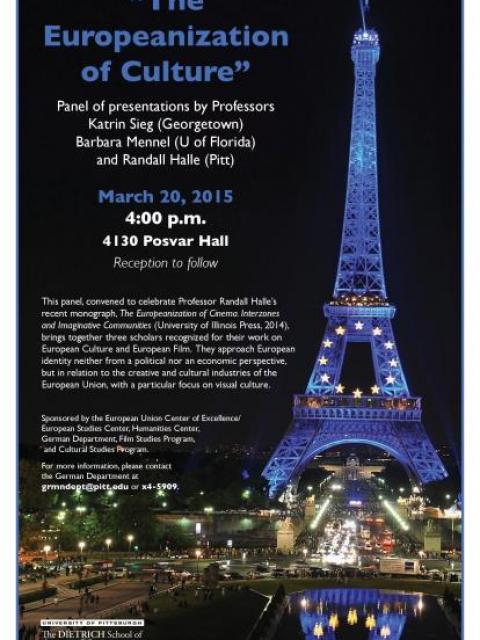
This panel, convened to celebrate Professor Randall Halle’s recent monograph, "The Europeanization of Cinema. Interzones and Imaginative Communities" (University of Illinois Press, 2014), brings together three scholars recognized for their work on European Culture and European Film. They approach European identity neither from a political nor an economic perspective, but in relation to the creative and cultural industries of the European Union, with a particular focus on visual culture.
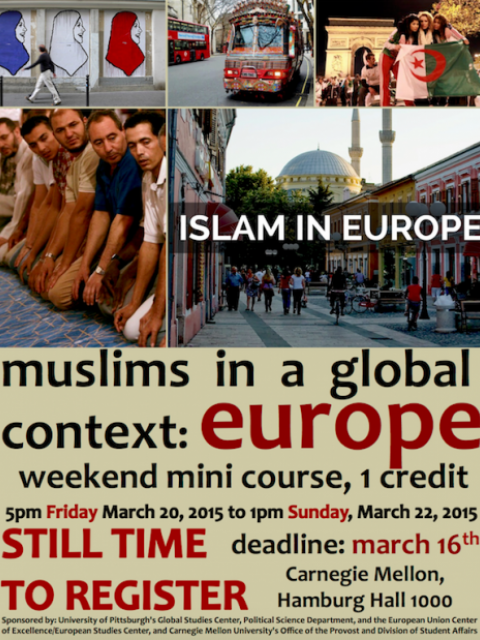
The Muslims in the Global Context series offers the opportunity to examine the factors and trends that are having major impacts on these diverse regions and their relationships with other world regions and countries. The mini-courses consist of presentations on topics of critical importance to the understanding of Muslims in diverse regions of the world. In addition to attendance at all lectures, students enrolled for credit are required to develop and write a research paper on one of the themes of the mini-course and answer reflection prompts during the course. One- credit/ 3 units for CMU students is provided for the completion of each mini-course.
This one credit mini-course is part of a series organized by regions around the world based on their role on the world stage, their importance within the Muslim world, and the critical influence they play in the global community. The series and course seeks to illuminate the various perspectives of the Muslim community around the world. Drawing upon the expertise and research of participating faculty from Carnegie Mellon University and the University of Pittsburgh and our partners at institutions around the world, the mini course series seeks to have students gain understanding of the religious, cultural, economical and political influences of Muslims in a global context.
5pm Friday March 20, 2015 to 1pm Sunday, March 22, 2015 (Carnegie Mellon, Hamburg Hall 1000)
All course information, including the speakers, schedule, and readings, may be found on the Global Studies website: http://www.ucis.pitt.edu/global/mini-course/europe
DEPARTMENT OF CLASSICS SPONSORS MOVIE NIGHT
"A FUNNY THING HAPPENED ON THE WAY TO THE FORUM"
SOMETHING APPEALING, SOMETHING APPALLING, SOMETHING FOR EVERYONE...A COMEDY TONIGHT!!
When a wily, witty, lying, lazy cheating slave discovers that his master's son is in love with the girl next door - a virgin courtesan - he promises to help win her heart in exchange for his freedom. But the road to romance is blocked with amazing surprises, cunning sidguises - and an awesome chariot race!
THURSDAY, MARCH 19, 2015
6:00 p.m.
CATHEDRAL OF LEARNING G13
University of Pittsburgh Department of Classics and the Pittsburgh Chapter of the Archaeological Institute of America:
“The Dining Gaul (and His Phrygian Dishes)"
Shannon Stewart
AIA Lecturer
Although Ancient authors had little interest in recording the details of daily life of the Gauls, excavation and research has generated a large corpus of relevant data especially from Hellenistic houses (333-189 BCE) at Gordion, an archaeological site in central Turkey. When considered together, the evidence reveals much about food in its original quotidian context and even more about the residents themselves: what they ate and drank, how it was prepared and served, and how and why these culinary customs changed over time.
Shannon Stewart has excavated in Israel, Cyprus, Turkey and Albania. Her areas of specialization are Hellenistic pottery, the archaeology of domestic life, "Hellenization," and Anatolia in the First Millenium BCE.
Wednesday, March 18, 2015
4:30 p.m.
1500 Wesley W. Posvar Hall
Free to the public
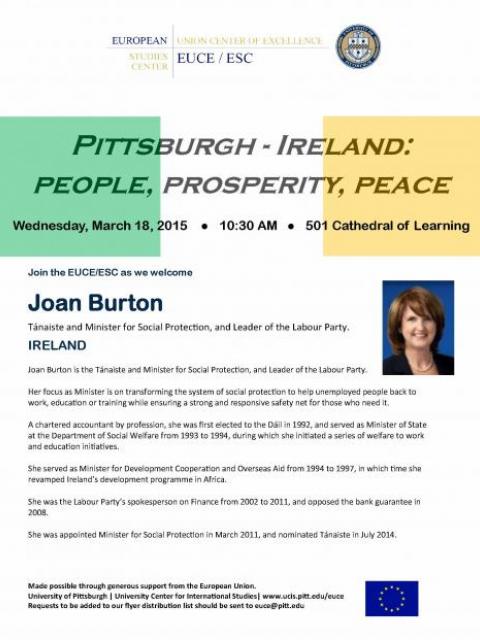
Tánaiste Burton was first elected to the Dáil (parliament) in 1992, and served as Minister of State at the Department of Social Welfare from 1993 to 1994, during which she initiated a series of welfare to work on education initiatives. She served as Minister for Development Cooperation and Overseas Aid from 1994 to 1997, in which time she revamped Ireland’s development programme in Africa. She was the Labour Party’s spokesperson on Finance from 2002 to 2011, and opposed the bank guarantee in 2008. She was appointed Minister for Social Protection in March 2011, and nominated Tánaiste in July 2014.
••For assistance in granting students extra credit, please contact Eleni Valliant (env1@pitt.edu).
arch 2011, and nominated Tánaiste in July 2014.
The purpose of this conference is to exchange information on the public policies aimed at managing risks in the shale sector in the US and in other countries that are exploring shale development, including the UK, China, South Africa, Argentina and Poland. Presenters from France and Germany will also discuss the decisions of those countries to limit shale development and the consequences and opportunity costs of those decisions. Discussion among presenters and the audience will focus on the current evidence on risks and the effectiveness of mitigation strategies. We will also discuss the need to fill informational gaps in order to understand the risks and to innovate risk management strategies in the shale industry. Conference registration as well as a conference schedule can be found online: http://shanti1.weebly.com/conference-2015.html
This talk focuses on three early films by Bigas Luna: Bilbao (1978) and Caniche (1979) and Lola (1986), often regarded as a ‘sex trilogy’. Long and very public feuds with female starts became a constant throughout his career, partly motivated by the director’s self-proclaimed obsession with myths and taboos about women and the female body and a penchant for their explicit depiction in his films. Professor Hernandez will argue that controversies like these have tended to dominate and obscure the critical reception and the sociological and aesthetic value of the films.
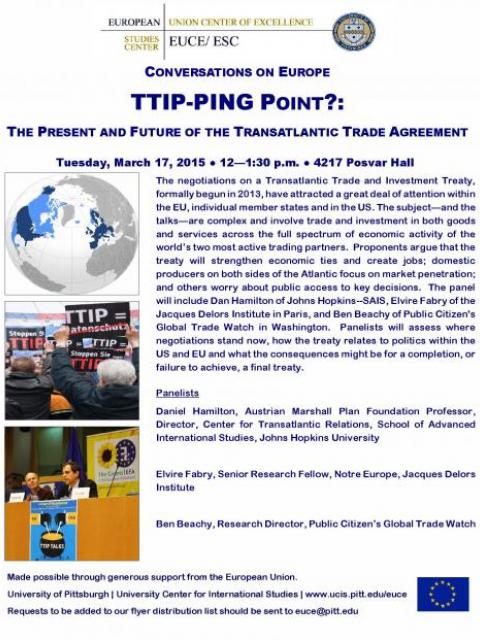
The negotiations on a Transatlantic Trade and Investment Treaty, formally begun in 2013, have attracted a great deal of attention within the EU, individual member states and in the US. The subject—and the talks—are complex and involve trade and investment in both goods and services across the full spectrum of economic activity of the world’s two most active trading partners. Proponents argue that the treaty will strengthen economic ties and create jobs; domestic producers on both sides of the Atlantic focus on market penetration; and others worry about public access to key decisions. The panel will include Dan Hamilton of Johns Hopkins--SAIS, Elvire Fabry of the Jacques Delors Institute in Paris, Evgeny Postnikov of Glasgow University, and Ben Beachy of Public Citizen's Global Trade Watch in Washington. Panelists will assess where negotiations stand now, how the treaty relates to politics within the US and EU and what the consequences might be for a completion, or failure to achieve, a final treaty.
The UCIS-Nine University and College International Studies Consortium of Georgia Joint Faculty Development Workshop on “Mobilizing People, Students, and Ideas: Social Movements across the Globe and in the Undergraduate Curriculum” was held on March 6, 2015. The organizer of the program was the Director of the Consortium, Dr. Raj (Rajgopal) Sashti, of Middle Georgia State College. It was held on the campus of Clayton State University in Morrow, GA (metro Atlanta area) as part of an on-going collaboration.
How to Apply to USAJobs
Thursday, March 5th at noon in Posvar 4217
The US government provides some amazing job opportunities. But how can you make your application get noticed in such a competitive and daunting system? Two members of the HEPC (Federal Hispanic Employment Program Committee) will give a presentation to help students to better navigate the USAJobs website and application system and give tips on how to submit a more competitive application.
Baptiste and Marianne, King and Queen of the Runaways: Marronage in French Colonial Louisiana
The History Department Work-in-Progress Series presents Yevan Terrien, University of Pittsburgh. Lead discussants, Niklas Frykman and Allyson Delnore. Draft will be circulated via department Box three weeks in advance.
4:30 - 6:00 p.m.
Department of History Lounge
3703 Posvar Hall
University of Pittsburgh
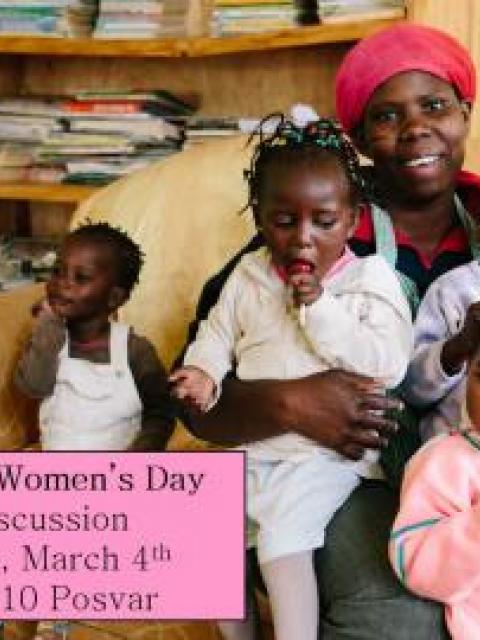
Are you interested in global issues? Join representatives from UN Women, Peace Corps, and Hekima Place to discuss international women’s issues and learn how you can get involved with organizations working to address inequality throughout the world.
Dr. Wolfgang Wessels is a leader in European and European Union Studies in Europe. His Jean Monnet Chair at the University of Cologne is a key partner with the EUCE at the University of Pittsburgh in a multi-country researcher exchange funded by the European Union: EU-GLOBAL. As an expert on the institutions of the EU and a leading authority on the powers and competencies, Dr. Wessels will provide an analysis of the Council’s role as crisis manager during the economic crises that have plagued Europe and the Union since 2008.
Lunch will be served to pre-registered attendees only, seating limited.
To register for the lunch, please send an email to euce@pitt.edu.
The European Union’s Emissions Trading System (EU-ETS) is the engine of the global carbon market, accounting for more than 80% of the global market value of emissions trading permits. Additionally, a number of other States and sub-national actors have either linked their emissions trading systems to the EU-ETS, or contemplate doing so in the future. Given the size of the EU-ETS, these countries are thus largely tying the viability of their emissions trading schemes to the health of the EU-ETS. The lessons learned are highly pertinent for other emerging national and regional emissions trading schemes, or may even serve as a “template” for a future global carbon market. Professor Burns will briefly outline the genesis and evolution of the EU-ETS, as well as the major problems that currently afflict it and their implications for long-term climate policymaking in the European Union. In conclusion, he will offer a series of suggestions on how to reform the EU-ETS to ensure that it meets its overarching objectives of driving fuel-switching and technological innovation.
Manuel Gonzalez de Molina Calderon
My Travels/Mis Viajes
Drawings and Watercolors by a 12-year old talent from Seville, Spain
March 3-30, 2015
Make Your Mark Artspace and Coffeehouse
6736 Reynolds Street, Point Breeze/Pittsburgh
(412) 365-2117
"The Argumentation of Plato's Phaedo and the Nature of Soul"
Why do the Phaedo's arguments for the sou's immortality often seem so weak or even transparently fallacious? Is there some philosophical, rather than merely developmental, explanation? This paper will argue that the Phaedo's arguments are operating in accordance with the method of hypothesis and as such are intended to function as something other than proofs. They progress inductively towards the understanding of the nature or essence or soul ultimately required for a demonstration of its immortality.
John A. Palmer III
Professor, Department of Philosophy, University of Florida
Visiting Fellow, Clare Hall, (Faculty of Classics), Cambridge University, 2014-2014
Friday, February 27, 2015, 4:00 p.m.
244B Cathedral of Learning
Reception following lecture in the Crogan-Schenley Room, 156 Cathedral of Learning
Are you interested in global issues? Have you ever considered a career in global health? Join us for an alumni and professionals' panel on Friday, February 27th. Panelists will share about their career paths in the field and discuss skill-building opportunities and how to become a competitive candidate in the job market.
One presenter for this career panel will be:
Dr. Tina Phillips Johnson
Ph.D., University of Pittsburgh, 2006
History, Women's Studies Certificate
Master of Public Health
Professor Federiga Bindi will share her experiences and insights on the challenges of women leadership in foreign policy-related positions. As adviser to Federica Mogherini, High Representative of the Union for Foreign Affairs and Security Policy, and former Italian Minister of Foreign Affairs, Dr. Bindi has served and advised governmental institutions in the US, Italy, Portugal and Norway, in addition to the EU. Professor Bindi is very engaged in promoting women leadership in International Relations; she is currently working on a book project and has organized a number of trainings in this field.
As more faculty and students become involved in international research, the need for understanding and complying with regulatory and legal issues increases. This program will provide specific information for faculty and students who are planning to conduct international research now or in the future with university or external grant support. It is also highly recommended that faculty mentors who will be advising students going abroad attend this session. Topics that will be discussed include requirements related to the IRB as well as legal/financial matters. All are welcome to attend and no registration is required.
‘Knowledge is of Universals’ – How to Understand Aristotle’s Claim without Problems
Pieter Sjoerd Hasper
Assistant Professor, Department of Philosophy, Indiana University at Bloomington
After canvassing the contexts in which Aristotle makes the claim that ‘Knowledge is of Universals’ (primarily in his account of experience (empeiria) and in his anti-Platonic discussions of the ontological status of universals, but also elsewhere) and the problematic aspects of this claim, I will propose an interpretation of it which does not get Aristotle into trouble. My interpretation comes in three stages. First I show briefly how knowledge of universals, by consisting in scientific explanatory demonstrations, does not comprise mere knowledge of universal facts and the possession of universal concepts. Then I show more extensively that Aristotle presupposes that scientific explanatory demonstrations have a certain logical form, namely the one common in Greek mathematics, where a theorem is proved in the case of an arbitrary individual. Aristotle uses arguments of this form in his logic, he accuses Platonists of having a false interpretation of them, and presupposes this logical form in his argument from Universal Mathematics against the existence of Platonic Forms (Metaphysics M.2). Finally, I show how with this interpretation in hand we can make sense of Aristotle’s claim to have solved, in Metaphysics M.10, ‘the greatest difficulty’ with the claim that knowledge is of universals without committing himself to the existence of Platonic Forms.
Friday, February 20, 2015
4:00 p.m.
244B Cathedral of Learning
Reception following lecture in in the Crogan-Schenley Room, 156 Cathedral of Learning
2015 marks the 70th anniversary of the end of World War II. Join the JASP for an evening of reflection on the Japanese-German alliance. Dr. Ricky Law, Assistant Professor of History at Carnegie Mellon University, will speak.
His lecture will provide an overview of the origins, formation, development, and fall of the Axis alliance between Japan and Germany before and during World War II. It will discuss major events such as the Anti-Comintern Pact of 1936, the Tripartite Pact of 1940, and the attack on Pearl Harbor in 1941.
Join the JASP for this free evening at the Pittsburgh Athletic Association from 6:00 - 8:00 p.m., February 19, 2014. Light hors d’oeuvres and beverages will be provided. Space is limited so please register by February 13 at http://www.us-japan.org/jasp/events.html.
In recent months the Chinese have greatly increased their visibility and economic involvement in Europe. China is now the EU’s second leading trading partner and the EU is China’s first. EU leaders are increasingly attentive to Chinese views on a number of issues, including a range of economic and strategic topics. Panelists on this Conversation will explore both the current state of EU-China relations, the implications for Transatlantic ties and future directions of this dynamic relationship.
The panel will include: Gemma Marolda, Lecturer in the Department of Political Science and the Graduate School of Public and International Affairs at Pitt (and an affiliated faculty member of our Center); Isabel Hilton, Editor at chinadialogue.net and former journalist for The Sunday Times, The Independent, The Guardian, and the New Yorker; David Scott, former Lecturer at Brunel University London and a frequent speaker at EU Parliament on the EU-China relationship, and at the NATO Defence College in Rome on Indian foreign policy and on Asia-Pacific international relations; and Jing Men, an InBev-Baillet Latour Professor of European Union-China Relations and InBev-Baillet Latour Chair of European Union-China Relations at the College of Europe, Brugges.
Panelists will be linked to audiences at Pitt and elsewhere and faculty and class participation is welcome.
Conversations on Europe is a monthly series of "virtual roundtables" featuring experts from Europe and North America commenting on current events impacting the U.S. and Europe. Individuals and audiences participate in person and via live remote connection. If you are interested in connecting, contact Kate Bowersox (kal68@pitt.edu) or Allyson Delnore (adelnore@pitt.edu).
"Instruments and impediments: a Senecan-Aristoteleian debate on the activation of the virtues"
Margaret Graver
Aaron Lawrence Professor of Classics
Dartmouth College
Several of Seneca’s letters supply pointers to a much older debate on the sufficiency of virtue for happiness. Picking up on cues from Aristotle, some Peripatetics had argued that external goods are instrumentally necessary for virtuous activities, and/or that external evils impede those activities. Not enough is said, however, about what sense of instrumentality is involved, and Stoics exploit that lack of clarity to refute the argument. The discussion that ensues is of interest in that it brings out certain tensions within the Stoic theory of action.
Friday, February 13, 2015
5:30 p.m.
208B Cathedral of Learning
Reception following lecture in in the Crogan-Schenley Room, 156 Cathedral of Learning
Three visiting scholars at the Center for Disaster Management will present their perspectives on different types of risk that to which communities are exposed, from climate change in Micronesia to Avian Flu and Mine Fires in Turkey. Presenter Dr. Güner Gürtunca from the National Institute for Occupational Safety and Health will compare the US and Turkish mining industries in terms of managing safety and health issues. Tea and cookies will be served.
Do you love traveling and experiencing new cultures? Have you considered teaching abroad? Join Pitt alumni Thea Berthoff (TAPIF, France), Matthew Eppley (Peace Corps , Ukraine), and Dr. Katy Carlitz (Asian Studies Center) as they discuss their international experience and share tips on how to prepare yourself to teach English in a foreign country.
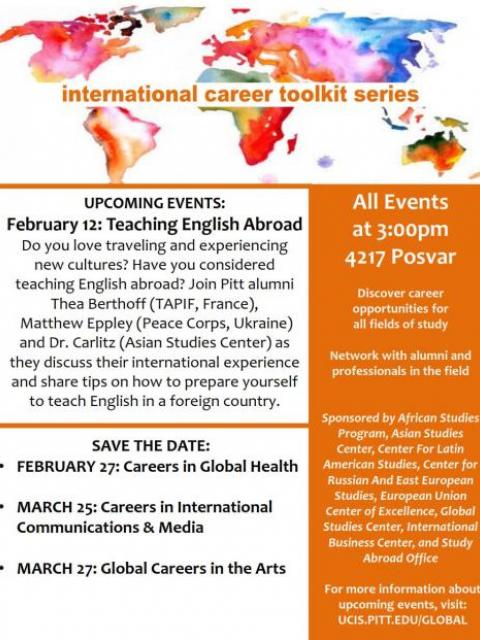
Do you love traveling and experiencing new cultures? Have you considered teaching English abroad? Join Pitt alumni Thea Berthoff (TAPIF, France), Matthew Eppley (Peace Corps, Ukraine) and Dr. Carlitz (Asian Studies Center) as they discuss their international experience and share tips on how to prepare yourself to teach English in a foreign country.
A timely discussion of the latest European financial crisis with a Greek business leader and former politician, who served in the Cabinet during the early years of the 2009 euro crisis.
The visible increase in religious practice among young European-born Muslims has provoked public anxiety. New government regulations seek not only to restrict Islamic practices within the public sphere, but also to shape Muslims’, and especially women’s, personal conduct. This presentation, based on Dr. Jouili’s forthcoming book, Pious Practice and Secular Constraints (Stanford, 2015), chronicles the everyday ethical struggles of women active in orthodox and socially conservative Islamic revival circles as they are torn between their quest for pious lifestyle and their aspirations to counter negative representations of Muslims within the mainstream society.
In 2013, governments across the European Union (EU) gave the European Commission a mandate to negotiate the Transatlantic Trade and Investment Partnership (TTIP) with the United States. Since July 2013, the two sides have held seven rounds of negotiations, but they have not yet reached an agreement. A motivating factor of TTIP is “regulatory convergence”, bringing American and European standards closer together to facilitate trade. One potential obstacle is the subject of genetically modified organisms (GMOs) in the context of food safety regulation. Approximately 70 percent of all processed food in American supermarkets contain GM ingredients, in contrast to the EU where GM food is severely restricted. This talk will review the regulatory differences between the two sides and how different approaches to GMO risk assessment create an obstacle to a TTIP agreement.
In light of Greece’s parliament elections on January 25th, Political Science Professor, Dr. Despina Alexiadou, will introduce the actors and issues involved, and will weigh in on what the results of the victory of the leftist Syriza party mean for Greece, for other possible austerity programs, and for Europe’s changing landscape.
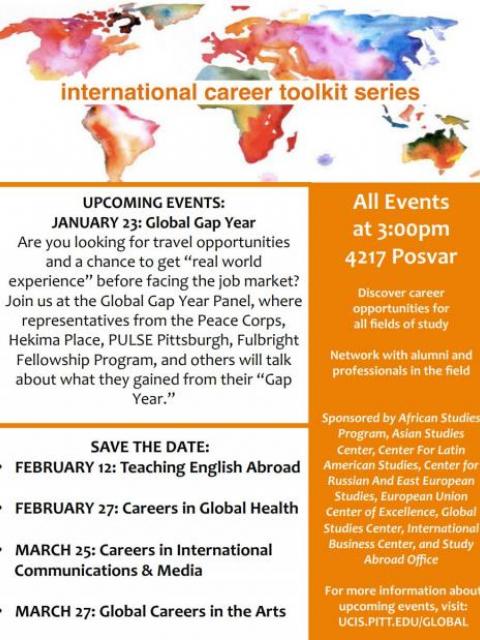
Are you looking for travel opportunities and a chance to get “real world experience” before facing the job market? Join us at the Global Gap Year Panel, where representatives from the Peace Corps, Hekima Place, PULSE Pittsburgh, Fulbright Fellowship Program, and others will talk about what they gained from their “Gap Year”.
Panelists include:
Abraham Kim, Peace Corps (Zambia)
Jessa Darwin, Hekima Place (Kenya)
Jenna Baron, PULSE, United Way, Fulbright Scholar (Pittsburgh, PA & Kenya)
Holly Hickling, FORGE (Paris & Zambia)
This panel will lead a discussion on the recent terror attacks in Paris, France. Professor Michael Kenney of GSPIA, Visiting Professor Luke Peterson of Global Studies and EUCE/ESC Associate Director Allyson Delnore will offer perspectives on the social, political and historical aspects of these events. Public, faculty and class participation is welcome.
In our first Conversation on Europe for 2015, panelists will consider the demands on and capabilities of the European Union as a major global actor. Panelists will use a Carnegie Europe “Memo to the European Union Foreign Policy Chief” as a starting point. The panel will include: Sir Michael Leigh of the German Marshall Fund (and former European Commission Director General for Enlargement); Stefan Lehne, Carnegie Europe (and former Director General for political affairs at the Austrian Ministry for European and International Affairs); Ulrich Speck, Carnegie Europe (and Editor of the weekly Global Europe Brief newsletter); Nathalie Tocci, Deputy Director of the Instituto Affari Internazionali (and advisor to EU Foreign Policy Chief, Frederica Mogherini); and Kostas Kourtikakis, who earned his Ph.D. at Pitt and is affiliated with the University of Illinois’s European Union Center.
Panelists will be linked to audiences at Pitt and elsewhere and faculty and class participation is welcome.
Mark De Vos holds a Licentiate and Doctorate in Law (Universiteit Gent), a Master in Social Law (Université Libre de Bruxelles), and a Master of Laws (Harvard University). He teaches employment and labor law, EU-law, and the rule of law at Ghent University and the University of Brussels. He is the director of the Itinera Institute, an independent policy think-tank based in Brussels. He frequently publishes, lectures, and debates on issues of labor and employment law, European integration, globalization, labor market reform, pensions, ageing, healthcare, and welfare state, both nationally and internationally, and both academic, professional and policy circles, as well as in the media.
Professor Spoon’s presentation is based on work (with Heike Klüver) on how voter polarization affects party responsiveness. The authors analyze party responsiveness across nine West European countries and argue that party responsiveness increases with the polarization of issues among voters. Professor Spoon is Associate Professor in the Department of Political Science at North Texas and a candidate for the position in European politics in the Department of Political Science.
This paper is based on Professor Slapins’ forthcoming Cambridge University Press book (with Sven-Oliver Proksch) of the same title. Professor Slapin is Associate Professor in the Department of Political Science at Houston and a candidate for the position in European politics in the Department of Political Science.
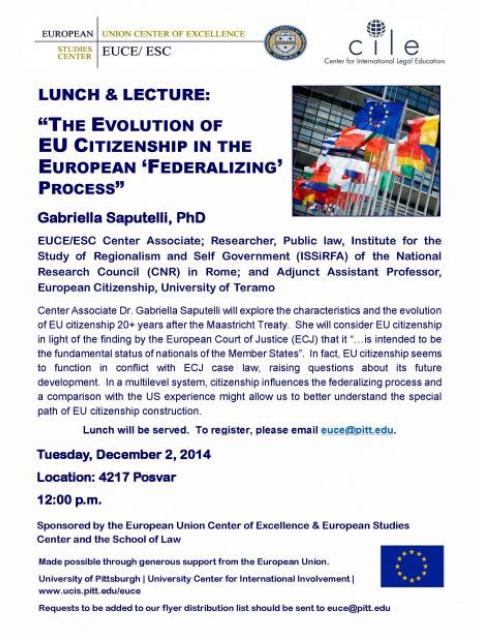
Center Associate Dr. Gabriella Saputelli will explore the characteristics and the evolution of EU citizenship 20+ years after the Maastricht Treaty. She will consider EU citizenship in light of the finding by the European Court of Justice (ECJ) that it “…is intended to be the fundamental status of nationals of the Member States”. In fact, the way in which EU citizenship and ECJ case law function raises questions about its future development. In a multilevel system, the federalizing process influences aspects of citizenship, and a comparison with the US experience might allow us to better understand the special path of EU citizenship construction. Lunch will be served. To register, please email euce@pitt.edu.
The EUCE/ESC will be hosting the 2014 High School Model EU, which allows students the opportunity to participate in a simulation of a recent European Council meeting. For more information, please contact EUCE/ESC Assistant Director for External Affairs, Kate Bowersox, at kal68@pitt.edu.
On November 16, 2014 the second round in the Romanian presidential elections ended with the upset victory of an ethnic German candidate from the provinces. These surprising results defied nationalist mobilization and the current government’s administrative control of the electoral process. In spite of pollsters’ and analysts’ predictions, Klaus Iohannis, the candidate with fewer votes in the first round came from behind and succeeded in taking the presidency over the leading candidate, the sitting Social Democratic Prime Minister, Victor Ponta. A new electoral pattern emerged around two related phenomena: the Romanian diaspora mobilized and transformed an ordinary election into a transnational event, while new media and online social networks played an important role in mobilizing these voters.
Marius Lazăr is Fulbright Visiting Scholar at CREES and Associate Professor of Sociology at „Babes-Bolyai” University of Cluj, Romania. He is a cultural sociologist and author of Paradoxes of Modernity: Elements for a sociology of cultural elites (Paradoxuri ale modernizării. Elemente pentru o sociologie a elitelor culturale, 2002). His current research is in the sociology of literature and of ethnic relations.
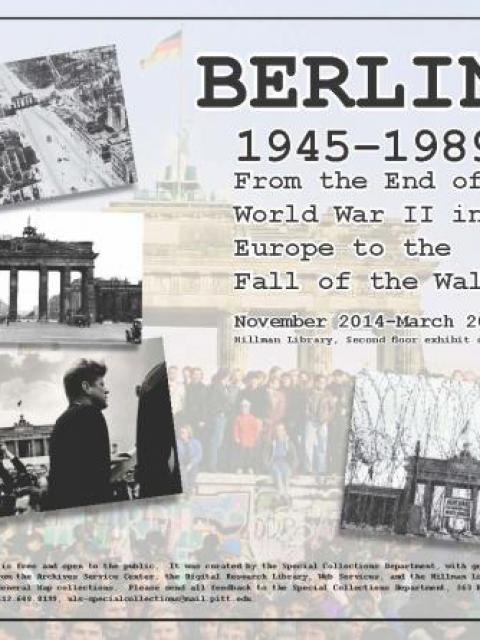
A part of the 25 Years – Fall of the Berlin Wall Series, this exhibit is free and open to the public. It was curated by the Special Collections Department, with grateful assistance from the Archives Service Center, the Digital Research Library, Web Services, and the Hillman Library Journal and General Map collections.
Come and enjoy selections from the Oberhausen International Short Film Festival. This event will feature the best selections from the 2014 German Program as well as the 2014 Music Video Program
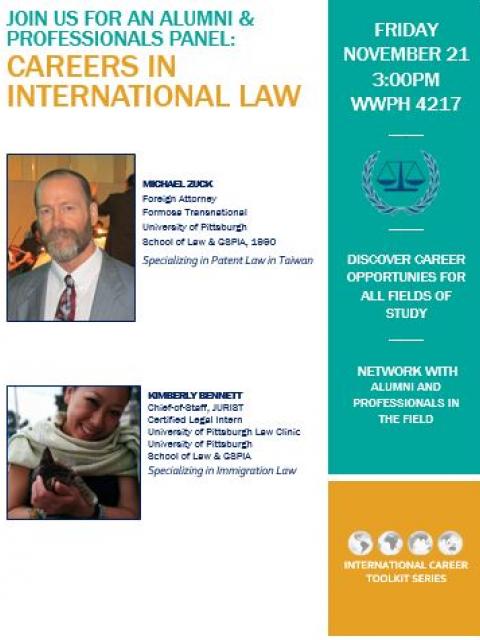
Interested in global issues? Join us for an Alumni & Professionals Panel on Careers in International Law. Discover career opportunities for all fields of study and network with alumni and professionals working globally. Our diverse panel will discuss a variety of career options and share insights about how to make yourself more competitive in the job market.
Faculty and graduate students are warmly invited to join us later today for an afternoon focusing on Digital Humanities in research and teaching, hosted by Eighteenth-Century Studies at Pitt, with co-sponsorship from the Department of French and Italian.
Event Details
Humanities Center, Cathedral of Learning, Room 602
November 20, 2014
2:00 p.m. - 5:30 p.m.
Professor Edelstein (PhD University of Pennsylvania, 2004) is Professor of French and, by courtesy, of History, at Stanford University. He is a leading figure in the large-scale, NEH-funded digital humanities project, Mapping the Republic of Letters: http://republicofletters.stanford.edu/
Dan will offer a two-part event at our Humanities Center. First, he will give a lecture on Stanford’s Mapping project, with a demonstration of their visualization tools. Following a break (we hope to offer coffee, juice, cookies), Dan will lead a general discussion on the potential and perils of Digital Humanities in research and teaching. We expect to be joined by Pitt faculty experts in Digital Humanities as further interlocutors. We hope for a lively, interdisciplinary audience in eighteenth-century studies and indeed well beyond.
All Humanities and Social Science faculty and graduate students are welcome to join us for all or part of the afternoon.
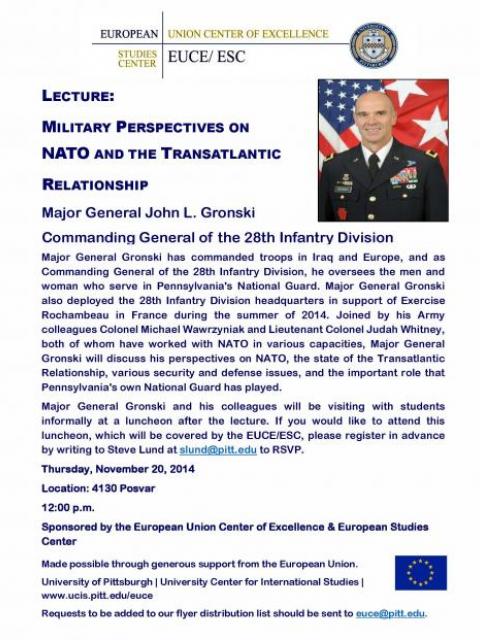
Major General Gronski has commanded troops in Iraq, Europe and, as Commanding General of the 28th Infantry Division, oversees the men and woman who serve in Pennsylvania's National Guard. Major General Gronski also deployed the 28th Infantry Division headquarters in support of Exercise Rochambeau in France during the summer of 2014. Joined by his Army colleagues Colonel Michael Wawrzyniak and Lieutenant Colonel Judah Whitney, both of whom have worked with NATO in various capacities, Major General Gronski will discuss his perspectives on NATO, the state of the Transatlantic Relationship, various security and defense issues, and the important role that Pennsylvania's own National Guard has played.
Major General Gronski and his colleagues will also be visiting with students informally at a luncheon after the lecture. If you would like to attend this luncheon, which will be paid for by the EUCE/ESC, please register in advance by writing to Steve Lund at slund@pitt.edu to RSVP.
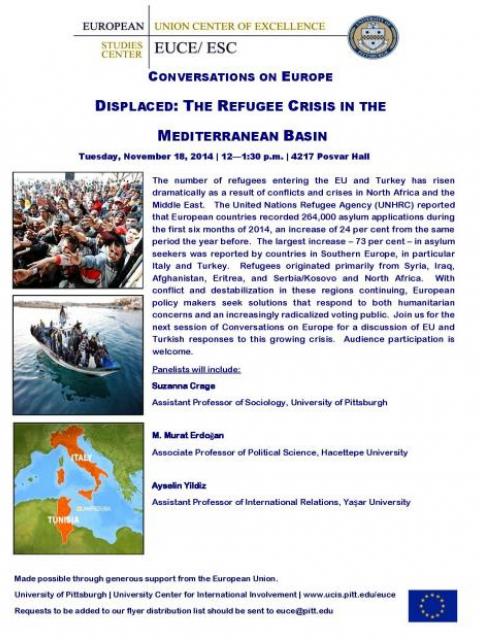
The number of refugees entering the EU and Turkey has risen dramatically as a result of conflicts and crises in North Africa and the Middle East. The United Nations Refugee Agency (UNHRC) reported that European countries recorded 264,000 asylum applications during the first six months of 2014, an increase of 24 per cent from the same period the year before. The largest increase – 73 per cent – in asylum seekers was reported by countries in Southern Europe, in particular Italy and Turkey. Refugees originated primarily from Syria, Iraq, Afghanistan, Eritrea, and Serbia/Kosovo and North Africa. With conflict and destabilization in these regions continuing, European policy makers seek solutions that respond to both humanitarian concerns and an increasingly radicalized voting public. Join us for the next session of Conversations on Europe for a discussion of EU and Turkish responses to this growing crisis. Audience participation is welcome. For more information, please visit our webpage on our Conversations on Europe.
Over the course of the week, Pitt campus will be alive with international activities, global events and the buzz of the International Week Contest, which will grant 1 free Summer 2015 Study Abroad Panther Program (tuition scholarship) to a country of your choice, a Sony NEX-F3 camera, or an apple ipad. For a full list of events, please review the International Week Website to learn more about how to add an international focus to your academic experience.
Free and open to the public, the Society for Ethnomusicology is offering a free workshop to those interested in learning the basics of Irish dance. Registration is not necessary for this portion of the conference's program.
Welcome and Brief Introduction: Meng Ren, PhD Candidate, Department of Music
Dance Menu:
Two Hand Reel
Walls of Limerick
Waves of Tory
Gay Gordon
Dance Performance by Children of the Shovlin Academy of Irish Dance
Haymaker's Jig
Two Hand Honpipe
Rakes of mallow
Keel Row
Musicians: Vince Burns (fiddle), Richard Withers (Flute and accordion), Bruce Molyneaux (Tenor banjo and mandolin), caller (Liz Shovlin Grinko)
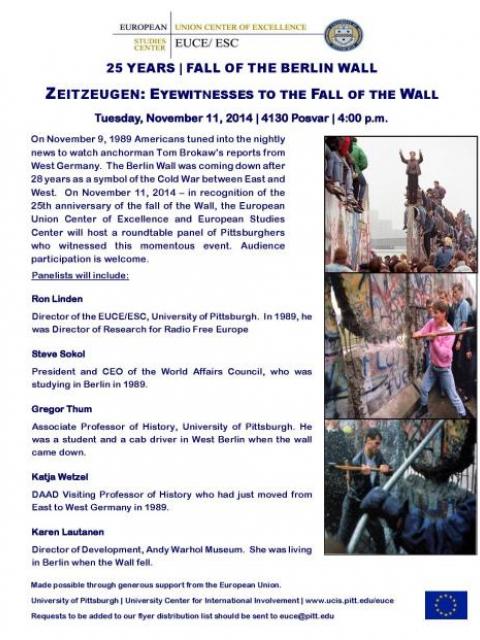
On November 9, 1989 Americans tuned into the nightly news to watch anchorman Tom Brokaw’s reports from West Germany. The Berlin Wall was coming down after 28 years as a symbol of the Cold War between East and West. On November 11, 2014, in recognition of the 25th anniversary of the fall of the Wall, the European Union Center of Excellence and European Studies Center will host a roundtable panel of Pittsburghers who witnessed this momentous event. Audience participation is welcome.
Hungarian tourism promoters in the 1930s gnashed their teeth in frustration at a sluggish domestic travel market. In their minds, Hungarians were disloyal and ungrateful tourists, ignorant of their country and therefore unwilling to spend their vacations "at home" rather than abroad. The solution, these promoters decided, was to appeal to Hungarians' sense of patriotism and guilt them into traveling. But in neighboring Austria, another post-imperial country with its own struggles to stimulate tourism, such arguments were nowhere to be found. Austrians, it seems, did not need to be goaded into "seeing Austria first." What explains this disparity? In part, it has to do with two different visions of "homeland," one which defined the nation as an expression of local identity (and vice versa), and another that saw the state belonging to a single, fixed nation awaiting "discovery." This talk, adapted from a chapter of Mr. Behrendt's dissertation-in-progress, proposes that a comparison of these cases helps us to a better understanding of how societies adapting to the end of empire have (re-)imagined the idea of "home" as the national and regional boundaries changed around them.
Model United Nations provides students the opportunity to learn about and discuss today's most relevant issues of international diplomacy through participation in an academic simulation.
Polishfest is an annual event featuring Polish folk music and dance, food, and arts and crafts. Funds raised help to support the Polish Nationality Room Scholarship fund.
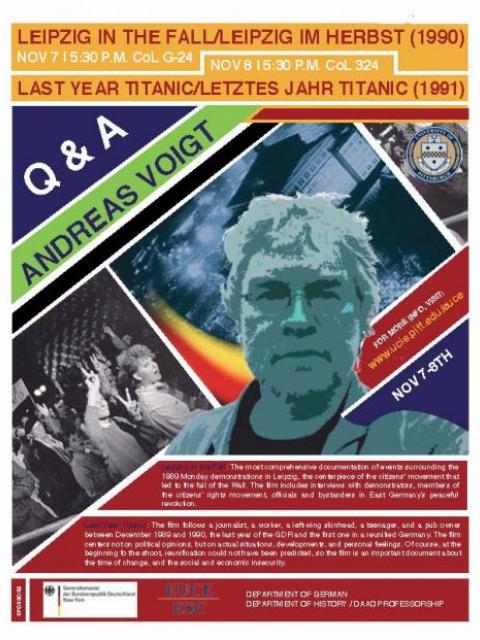
*Director Andreas Voigt will attend the screenings of his films November 7-8. A discussion with the director will directly follow the screening. Popcorn and drinks provided.
Voigt’s next film follows a journalist, a worker, a left-wing skinhead, a teenager, and a pub owner between December 1989 and 1990, the last year of the GDR and the first one in a reunified Germany. The film centers not on political opinions, but on actual situations, developments, and personal feelings. Of course, at the beginning fo the shoot, reunification could not have been predicted, so the film is an important document about the time of change, the social and economic insecurity, but it also has some ironic and even absurd moments and uses the metaphor of the last dance (from the Concise Routledge Encyclopedia of the Documentary Film, 2013).
http://www.andreas-voigtfilm.de/?testvariable=englisch&testvariable2=lei...
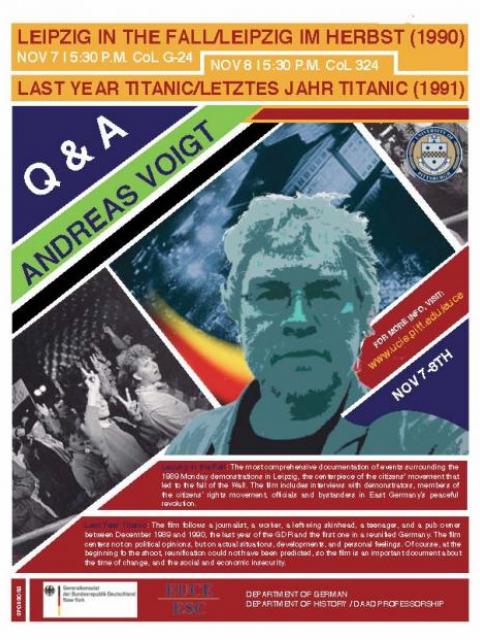
Considered to be the most comprehensive documentation of events surrounding the 1989 Monday demonstrations in Leipzig, this film highlights the centerpiece of the citizens' movement that led to the fall of the Wall. As the only professional team able to film in Leipzig at the time, demonstrators were interviewed, as well as members of the citizens’ rights movement, officials and bystanders in East Germany’s peaceful revolution. Film Director Andreas Voigt will attend the screenings of his films November 7-8. A discussion with the director will directly follow the screening.
The Annual Commemoration of Kristallnacht
Testimonies of Kristallnacht read by Pitt Students, video excerpts from eyewitnesses and survivors, Music by Susanne Ortner-Roberts, clarinetist
In the past year, Ukraine has experienced tectonic changes in its internal and external orientation, with the fall of the fall of the authoritarian regime of Viktor Yanukovych, a de facto war with Russia leading to the loss of the most heavily ethnic Russian areas (Crimea and the heart of Donbas) and a new anti-Russian and pro-Europe constitutional majority in parliament. The lecture will address the political, economic, and regional constraints that the Ukrainian government is facing in seeking to reestablish legitimacy, recover territory, and implement cardinal changes.
Widely published in the languages, literatures, and cultures of the ancient world, Dr. Katz is interested above all in the reconstruction of Proto-Indo-European and in etymology, which he views as part of the history of ideas.
Among the organizations from which he has received awards and fellowships are the American Council of Learned Societies, the Andrew W. Mellon Foundation, the Institute for Advanced Study, the National Endowment for the Humanities, and the National Science Foundation; he is especially pleased to have won, at Princeton, both the President’s Award for Distinguished Teaching and the Phi Beta Kappa Teaching Award.