Thursday, January 31st, 2019
Pitt Global Hub Student Focus Group Session
Location: 4400 Posvar Hall
Pitt’s Global Hub, currently under construction on the first floor of Posvar Hall, will be a dynamic new space showcasing International Studies related opportunities across campus. Equal parts event space, information center and student lounge, this attractive multi-use facility will serve as a convening point that helps students connect with globally focused faculty, student groups and academic programs. Key to the space will be a number of large and interactive digital screens that will share world news, info about campus events, and allow students to ask questions and gather info and referrals about programs and resources on campus. On January 31st at 6:00 p.m., the developer of these screens will be meeting with students to brainstorm about how they may function, and get feedback on the best ways to make them intuitive, informative and fun.
We hope that you will join us to share your comments and ideas. Pizza and food will be provided. Please rsvp to Steve Lund at slund@pitt.edu.
Wednesday, January 30th, 2019
Who Killed Jesus? The Roots of Christian Anti-Semitism
Time: 12:00 pm to 12:50 pm
Presenter: Rebecca Denova
Location: 1502 Posvar Hall
This lecture is a part of a one-credit mini course and public lecture series at the University of Pittsburgh.
Wednesday, January 23rd, 2019
Antisemitism Then and Now: Approaching Antisemitism
Time: 12:00 pm to 12:50 pm
Location: 1502 Posvar Hall
This lecture is a part of a one-credit mini course and public lecture series at the University of Pittsburgh.
Tuesday, January 15th, 2019
Conversations on Europe: The Finnish Education Model: What Can We Learn?
Time: 12:00 pm to 1:30 pm
Location: 4217 Wesley W. Posvar Hall
Finland’s education system consistently ranks high in the OECD’s annual Program for International Student Assessment (PISA) study, prompting U.S. educators and education reformers to ask “What can the U.S. learn from Finland?” In this installment of our monthly roundtable series, the ESC has invited education experts to discuss this question and explore issues impacting student achievement in both countries. Join us for this virtual roundtable to go beyond the op-eds and blog posts for a richer conversation on education in Europe and the U.S. Audience participation is encouraged.
To participate remotely, contact irm24@pitt.edu
Thursday, December 6th, 2018
Performer of the Year Juli Wood
Saxophonist Juli Wood, who is a fixture on the Chicago jazz scene and has appeared onstage at Finland’s Pori Jazz Festival and Storyville club in Helsinki, infuses traditional Finnish folk tunes with her unique jazzy style.
The granddaughter of Finnish immigrants, Juli tapped into her heritage for her CD Synkkä Metsä (Dark Forest), which one reviewer called, “An outstanding set with a compellingly beautiful cohesion.”
Juli studied jazz at the Wisconsin Conservatory of Music and has been mentored by noted jazz artists. In addition to performing on sax, she is a vocalist and composer.
Come and enjoy the jazz stylings of Juli, described by various reviewers as a “feisty saxist,” “a gutsy tenor and baritone saxophonist,” and one who “sings with great heart.”
Tuesday, December 4th, 2018
Conversations on Europe: 25 Years of the European Single Market
Time: 12:00 pm to 1:30 pm
Location: 4217 Wesley W. Posvar Hall
Join us for a virtual roundtable discussion of the European Single Market – Europe’s single most ambitious project for the economic integration of goods, capital, services and labor – as it celebrates 25 years. Audience participation is encouraged.
Panelists:
Jude Hays, Department of Political Science, University of Pittsburgh
Waltraud Schelkle, European Institute, London School of Economics
Catherine Barnard, Faculty of Law, University of Cambridge
Moderator:
Jae-Jae Spoon, Department of Political Science, University of Pittsburgh
Monday, December 3rd, 2018
Working Together: Ethnic Diversity in the European Workplace and Social Trust
Presenter: Peter Thisted Dinesen, University of Copenhagen, Denmark
Cost: Free and open to the public
The workplace has been neglected in the ever-expanding literature on the effect of ethnic diversity in social contexts on generalized social trust. Nevertheless, in the workplace individuals are continuously exposed to people of different ethnic backgrounds. In this paper the authors analyze the effect of workplace diversity on trust, using both surveys and administrative data from public registers on workplaces in Denmark. Consistent with theories positing negative effects of interethnic exposure, they find a negative effect of ethnic diversity in the workplace on social trust, an effect that is independent from the impact of diversity in residential settings.
Peter Thisted Dinesen, University of Copenhagen
Kim Mannemar Sønderskov, Aarhus University
Tuesday, November 27th, 2018
Youth's Revolt against the Non-Democratic Regimes: A Live Interview with Olena Nikolayenko, Fordham University
Presenter: Sean Guillory and Olena Nikolayenko
Location: 4130 Wesley W. Posvar Hall
At the turn of the twenty-first century, a tide of nonviolent youth movements swept across Eastern Europe demanding political change in repressive political regimes in Serbia, Azerbaijan, Belarus, Georgia, and Ukraine that emerged since the collapse of communism. This live interview with Olena Nikolayenko will discuss these youth movements and their ability to mobilize citizens against the authoritarian governments on the eve of national elections.
The Transatlantic Relationship: Perspectives from Germany
Time: 11:00 am to 12:30 pm
Presenter: Dr. Ursina Krumpholz
Location: 270 Mervis Hall
Join for a panel discussion of U.S.-German economic relations and learn more about German economic policies and priorities.
Featured speakers will include:
Dr. Ursina Krumpholz, Head of Commercial and Economic Section, Embassy of the Federal Republic of Germany
Stephanie Baer, Commercial Officer, Embassy of the Federal Republic of Germany
Irene Braam, Executive Director, Bertelsmann Foundation
Michael McKeon, Manager, Economic and Legislative Affairs, Bertelsmann Foundation
Moderated by:
Jacqueline Saslawski, International Business Center, Katz School of Business
Friday, November 16th, 2018
How Green Is It?
Evaluating Germany's Energy Transition
Presenter: Dr. Simon Richter
Location: Cathedral of Learning, 363
Announced by:
on behalf of
Cost: Free and open to the public
Dr. Simon Richter, Professor of Germanic Languages and Literature at the University of Pennsylvania will present the cultural story of Germany's energy transition (Energiewende) and help us think through whether it can be considered a failure or a success or somehow both.
Tuesday, November 13th, 2018
Conversations on Europe: Peace in Europe: 100 Year Anniversary of Armistice Day
Time: 12:00 pm to 1:30 pm
Location: 4217 Wesley W. Posvar Hall
Friday, November 9th, 2018
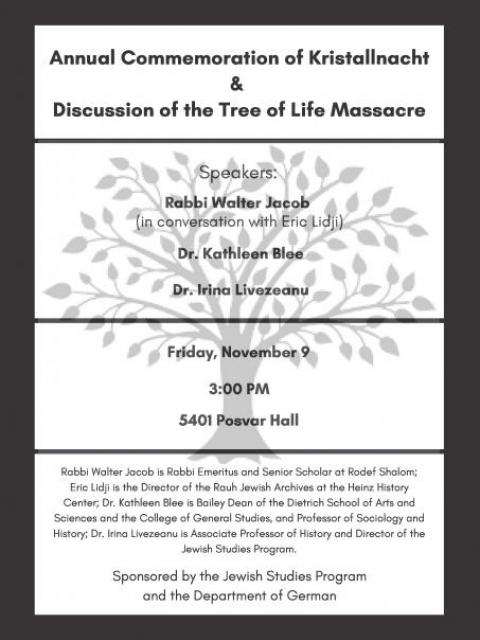
Discussion of the Tree of Life Massacre
Annual Commemoration of Kristallnacht
Presenter: Rabbi Walter Jacob
Location: 5401 Posvar Hall
Announced by:
on behalf of
Rabbi Walter Jacob is Rabbi Emeritus and Senior Scholar at Rodef Shalom;
Eric Lidji is the Director of the Rauh Jewish Archives at the Heinz History
Center; Dr. Kathleen Blee is Bailey Dean of the Dietrich School of Arts and
Sciences and the College of General Studies, and Professor of Sociology and
History; Dr. Irina Livezeanu is Associate Professor of History and Director of the
Jewish Studies Program.
This event is a courtesy listing.
Friday, November 9th, 2018 to Saturday, November 10th, 2018
Comparative European Governance: A Symposium in Honor of Alberta Sbragia
Various locations, see full program at: ucis.pitt.edu/esc/events/sbragia-symposium.
Thursday, November 8th, 2018
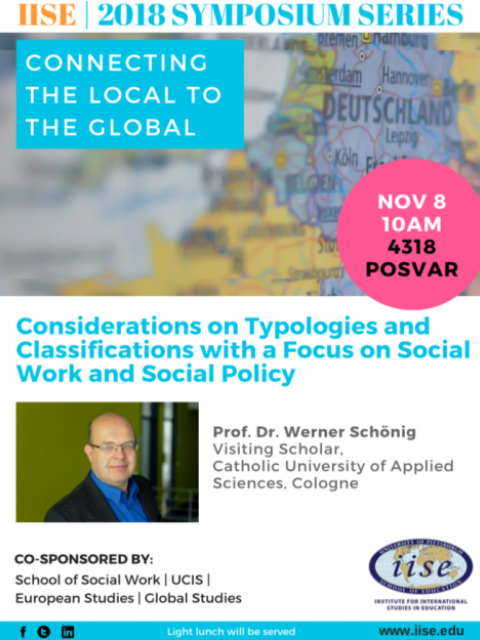
IISE 2018 Symposium Series
Considerations on Typologies and Classifications with a Focus on Social Work and Social Policy
Presenter: Prof. Dr. Werner Schönig
Location: 4318 Wesley W. Posvar Hall
In the upcoming Institute for International Studies in Education (IISE) Symposium Series, Professor Werner Schönig will discuss his latest research, “Considerations on Typologies and Classifications With a Focus on Social Work and Social Policy.” Schönig is currently a visiting scholar at the Institute for International Studies in Education and is a professor at Catholic University of Applied Sciences in Germany. This event is co-sponsored by the School of Social Work, University Center for International Studies, European Studies and Global Studies.
A light lunch will be served.
Monday, November 5th, 2018
Global Migration: The Case of the Volhynian Germans
Presenter: Jan Musekamp, DAAD Visiting Associate Professor
Location: 3703 Posvar Hall (History Department Lounge)
Announced by:
on behalf of
Friday, November 2nd, 2018
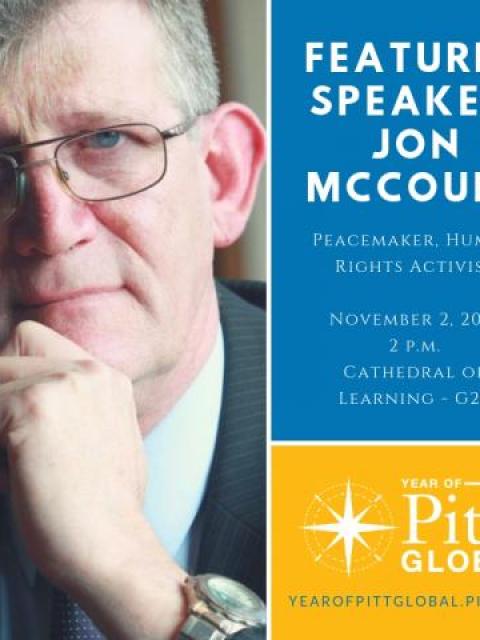
Year of Pitt Global Featured Speaker: Jon McCourt, civil rights and community activist
Location: Cathedral of Learning, G24
Jon McCourt has been a community peace activist and member of the Peace and Reconciliation Group in Derry, Northern Ireland, for more than 30 years. He played a major role in the development of the Community Awareness Training Programme and founded and established the first Victim Support Service in Northern Ireland in 1986. He has also worked with those involved in conflicts around the world, including Bosnia, the Middle East, Rwanda, and Colombia.
Join the Year of Pitt Global, the European Studies Center, and the Department of History for this Signature Event as we hear from Jon on his experience with conflict and peacemaking around the world.
Jon will answer questions following his talk!
Erwin Panofsky in Translation
Time: 11:00 am to 3:00 pm
Location: 602 Cathedral of Learning
Speakers: Sonja Drimmer (University of Massachusetts, Amherst), Josh Ellenbogen (University of Pittsburgh), Jacqueline Jung (Yale University), and Karl Whittington (The Ohio State University). Organizer: Shirin Fozi (University of Pittsburgh).
Fifty years after his passing, Erwin Panofsky (1892-1968) remains one of the most widely read art historians of the past century, and perhaps the single most influential figure in establishing (in his own phrase) "the history of art as a humanistic discipline." He also belongs to a generation of German Jewish scholars who began their careers in their native country but were displaced by World War II, and eventually came to North America where they had a profound impact on Anglophone scholarship. In Panofsky's case this has led to an odd but powerful historiographic divide: his early work, published in German, is still widely read in Europe but scarcely known in the United States -- especially compared to his later, widely renowned English-language publications.
This colloquium seeks to address that gap by bringing together a small, focused group of scholars to address Panofsky's early work in a set of new, unpublished translations. Participants will read pre-circulated English versions of three texts: "The Problem of Style" (1915), German Sculpture of the Eleventh through Thirteenth Centuries (1924), and "Imago Pietatis" (1927). The colloquium will be an opportunity to discuss the essays, consider their position in the humanities today, and also reflect on the process of translation as a means of increasing access to a pivotal era of transatlantic scholarly exchange.
Interested participants must RSVP to Karoline Swiontek (karoline@pitt.edu) no later than Friday, October 26. Participation is open to all, but space is limited and RSVPs are required in order to receive access to the pre-circulated texts. Coffee and a light lunch will be served.
Thursday, November 1st, 2018
Power to Change
Location: Cathedral of Learning, G8
Announced by:
on behalf of
Cost: Free and open to the public
Carl-A. Fechner's 2016 documentary uses Germany as a case study to offer a forward thinking vision of a sustainable, democratic, green future.
Historical Memory in Spain and Other Iberianist Challenges
Presenter: Sebastiaan Faber
Location: 602 Cathedral of Learning
Sebastiaan Faber presents a lecture centered on the continuing public debates in Spain over the legacy of the Civil War and Francoism, which have posed a series of challenges related to questions of disciplinarity, audience, and commitment.
Tuesday, October 30th, 2018
Panel Discussion on Energy Policy
Time: 12:00 pm to 1:15 pm
Cost: Free and open to the public
What is the Energiewende? Why is Germany heavily investing in renewable sources of power?
Is it politically controversial?
Dr. Jorg Radte of the University of Siegen and Dr. Nikolas Wolfing of the Centre for European Economic Research will answer your questions about German energy policies in this virtual panel.
Thursday, October 25th, 2018
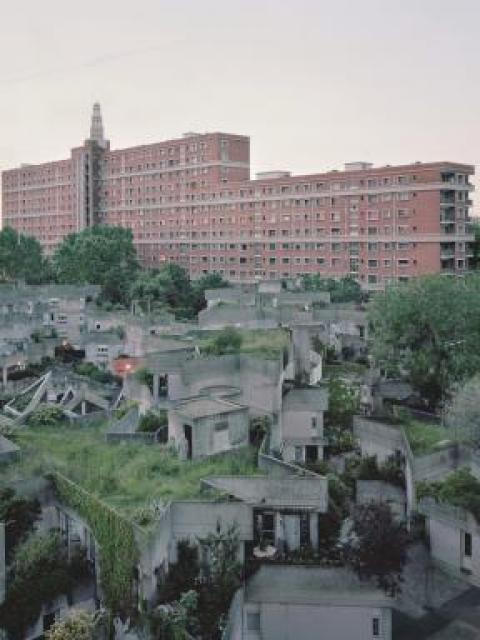
Hollywood in the French Projects
Peripheral Spaces, Minority Genres, and the Redefinition of National Cultures
Time: 12:30 pm to 2:00 pm
Presenter: David Pettersen
Location: 602 Cathedral of Learning
Colloquium featuring David Pettersen (French and Film and Media Studies)
with responses from Adam Lowenstein (English and Film and Media Studies) and Jeanette Jouili (Religious Studies)
Mixing It: Multinational, Multi-ethnic Britain in the Second World War
Time: 12:00 pm to 1:30 pm
Presenter: Wendy Webster, University of Huddersfield
Location: 3911 Wesley W. Posvar Hall
Cost: Free; pre-registration required
Waves of refugees, exiles, troops, and war workers from overseas meant that the population of Britain reached unprecedented levels of diversity during WWII. Once the war was over, this multi-national, multi-ethnic wartime population often remained, but their history has been largely forgotten. As History Revealed commented: “Wendy Webster is on a mission to make us remember.”
Lunch will be provided; pre-registration required
Registration link: https://mixingit.eventbrite.com
Thursday, October 25th, 2018 to Sunday, October 28th, 2018
19th Annual Conference of the Central Eurasian Studies Society
CESS 2018 : October 24-28, 2018 at the University of Pittsburgh
The Center for Russian, East European, and Eurasian Studies and the Graduate School for Public and International Affairs are pleased to host the 19th Annual Conference of the Central Eurasian Studies Society. Join over 300 scholars and professionals from around the globe for a conference, spanning five days of workshops, panels, forums, exhibits, and special events.
For more information about the program, see https://www.cess.pitt.edu/program.
Wednesday, October 24th, 2018
Monday, October 22nd, 2018
Black Women and the Struggle
Location: Posvar Hall 4217
Throughout France and the French colonies, black women have made powerful contributions to the struggle for equality and decolonization. The ESC invites students to join our panelists for a discussion surrounding black
Panelists:
Felix Germain, Department of Africana Studies
Silyane Larcher, Centre National de la Recherche Scientifique
Moderator: Jeanette Jouili, Department of Religious Studies
Thursday, October 18th, 2018
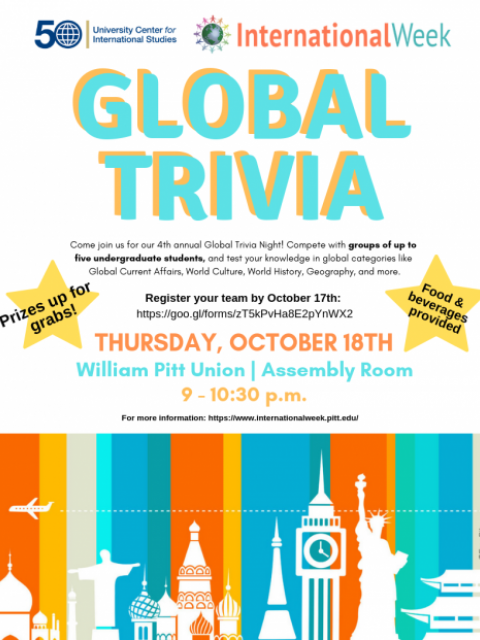
Global Trivia
Time: 9:00 pm to 10:30 pm
Presenter: International Week
Location: WPU Assembly Room
Come join us for our 4th annual Global Trivia Night! Compete with groups of up to five undergraduate students, and test your knowledge in global categories like Global Current Affairs, World Culture, World History, Geography, and more. Prizes include Apple Watches, Beats headphones, and Chipotle gift cards. Free food and beverages will be provided! Registration will close on Wednesday, October 17th at 11:59 PM, or once capacity is reached.
To register your team: https://docs.google.com/forms/d/e/1FAIpQLScqsn3oL2Hrg5eC09O7FTwY5DrSG_y8...
For more information on all things International Week: https://www.internationalweek.pitt.edu/
Sunday, October 14th, 2018 to Monday, October 15th, 2018
New York City Freshman Programs Trip
In this trip, students will tour the UN, learn about funding and internship opportunities available from IIE and DAAD, and visit the EU Delegation to the UN offices to learn first-hand about the EU's diplomacy efforts with regards to the UN. Open only to students in the International Studies: Europe Freshman Community.
Saturday, October 13th, 2018
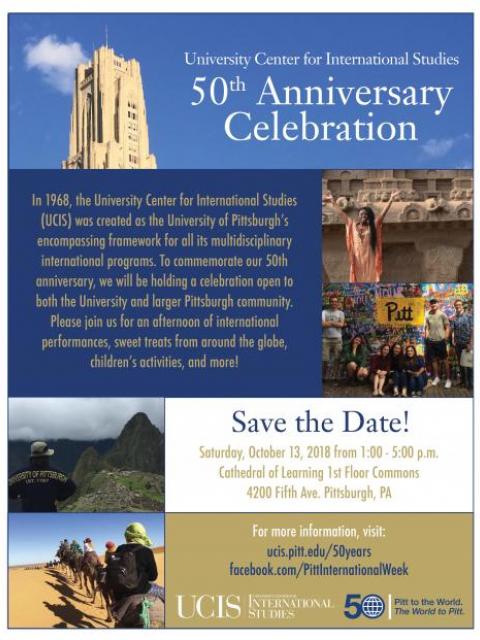
UCIS 50th Anniversary Celebration
Location: Cathedral of Learning 1st Floor Commons
In 1968, the University Center for International Studies (UCIS) was created as the University of Pittsburgh’s encompassing framework for all its multidisciplinary international programs. To commemorate our 50th anniversary, we will be holding a celebration open to both the University and larger Pittsburgh community.
Join us for an afternoon of international performances, sweet treats from around the globe, children’s activities, and more!
Wednesday, October 10th, 2018
Red Children’s Republics: Socialist Internationalism and Transnational Youth Exchanges During the Late Cold War
Presenter: Diana Georgescu, University College London
Location: 4130 Wesley W. Posvar Hall
The talk examines the widespread practice of youth exchanges during the late Cold War through two seemingly peripheral actors: the Romanian Pioneers, the children’s organization of the Romanian Communist Party, and one of its most active partners in the west, the International Falcons Movement, a leftwing youth organization with national branches in Germany, Austria, the United Kingdom, and France. Following Romanian and foreign teens who traveled as cultural ambassadors to youth camps organized in the Soviet bloc and Western Europe, the talk examines competing visions and practices of socialist internationalism in order to illuminate the role of “soft power” during the Cold War.
Monday, October 8th, 2018
Job Vacancies and Immigration: Evidence from Pre- and Post-Mariel Miami
Location: 4716 Posvar Hall
George Borjas will present his recent work on the effects of immigration on labor market opportunities revisiting the Mariel Boatlift episodes with a unique data set on monthly job vacancies.
Applied Demonstrations of Energy Infrastructure Development
A Systemic Overview of Innovation in Denmark
Time: 12:00 pm to 1:00 pm
Presenter: Bo Riisgaard Pedersen
Location: 102 Benedum Hall
Announced by:
on behalf of
This lecture is presented by Bo Riisgaard Pedersen, Special Advisor, Danish Energy Agency - part of the Danish Ministry of Energy, Utilities and Climate. This is the October speaker for the Center for Energy's lecture series.
Friday, October 5th, 2018
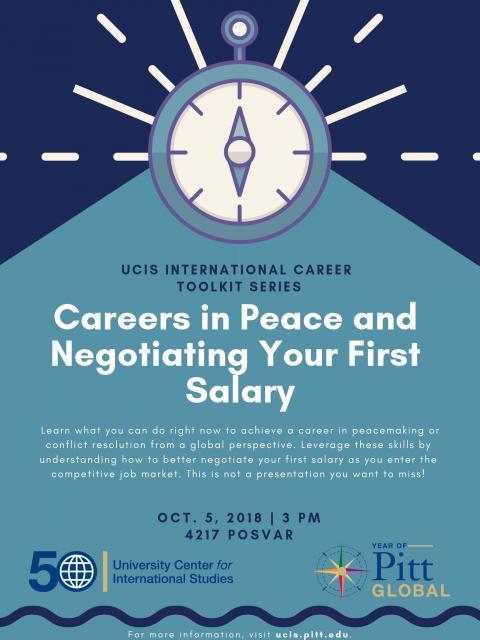
UCIS International Career Toolkit Series: Careers in Peace and Negotiating Your First Salary
Location: 4217 Posvar Hall
David J. Smith, JD, MS - Career Coach, Consultant for Conflict Resolution and Peacebuilding. David J. Smith’s work spans the fields of peacebuilding, conflict resolution, and civic and global education. He is the president of the Forage Center for Peacebuilding and Humanitarian Education, Inc. which offers experiential learning opportunities for students and professionals. He was formerly a senior program officer and manager of national outreach at the U.S. Institute of Peace. Learn what you can do right now to achieve a career in peacemaking or conflict resolution from a global perspective. Leverage these skills by understanding how to better negotiate your first salary as you enter the competitive job market. This is not a presentation you want to miss!
Wednesday, October 3rd, 2018
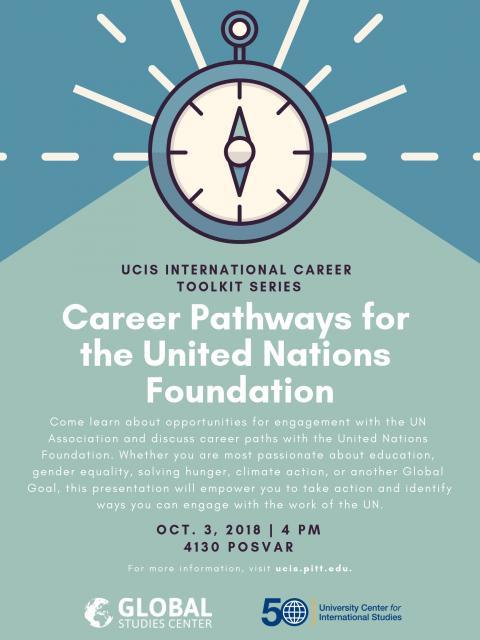
UCIS International Career Toolkit Series: Career Pathways for the United Nations Foundation
Presenter: Anna Mahalak - Youth Engagement Manager, United Nations Association-USA and the UN Foundation
Location: 4130 Posvar Hall
You can be a local leader for the United Nation's 17 Sustainable Development Goals! Come learn about opportunities for engagement with the UN Association and discuss career paths with the United Nations Foundation. Whether you are most passionate about education, gender equality, solving hunger, climate action, or another Global Goal, this presentation will empower you to take action and identify ways you can engage with the work of the UN.
Monday, October 1st, 2018
Memory Conflicts as Barrier to Reconciliation: Post-Soviet Disputes between Baltic States and Russia
Presenter: Katja Wezel, Reseach Associate, University of Gottingen, Germany
Location: 4130 Wesley W. Posvar Hall
In 2009, the Estonian political scientists Pirat Shin and Wiki Berg argued that "the permafrost in Baltic-Russian relations shows no signs of melting." This talk will analyze why post-Soviet Baltic-Russian relations have been so difficult and how different interpretations of history play a key role.
The Importance of Civil Society & Civic Education for Global Democracy
A Perspective from the Heinrich Böll Foundation
Time: 12:30 pm to 2:00 pm
Presenter: Ellen Überschär, Co-President, Heinrich Böll Foundation
Location: Posvar Hall 4217
Cost: Free; Advanced Registration Required
Democracies around the world are increasingly under pressure from authoritarian challenges. In Europe, for example, anti-liberal movements have been on the rise in the past years, bringing up fears of democratic backsliding there. The Heinrich Böll Foundation, a political foundation that is affiliated with the German Green Party, engages with civil actors in over 60 countries and supports their efforts in fostering democracy and human rights, taking action to prevent the destruction of the global ecosystem, advance equality between women and men, and defending the freedom of individuals against excessive state and economic power. The foundation’s president Dr. Ellen Überschär will give an insight into the foundation’s work to strengthen civil societies and civic education in Germany and the foundation’s international network.
Lunch will be provided to the first 20 students who register by September 28, 2018.
Registration is required to attend.
Thursday, September 27th, 2018
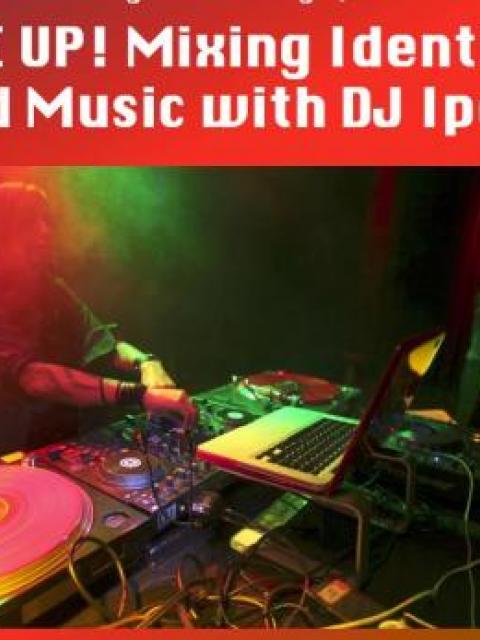
WAKE UP!
Mixing Identities and Music with DJ Ipek
Time: 11:00 am to 12:15 pm
Location: 538 William Pitt Union
DJ Ipek – a German-Turkish music artist, and political
activist – will host a workshop on the art of DJing as
well as on issues of race, and gender in Germany and
Turkey. The workshop will be held in English and open
to all students and members of the Pitt community.
Both participants and observers are welcome.
Wednesday, September 26th, 2018
Food, Gender, and Media in Italy
Presenter: Fabio Parasecoli, New York University
Food, if interpreted just as an expression of biological needs, may come across as natural and apolitical. It does not take much to realize that food is actually profoundly entangled with power dynamics and social structures that assume immediate, tangible meanings. In its cultural and media representations, food reflects, supports, and reinforces values and practices that contribute to constructing identity, including gender.
In this talk, an analysis of media development in Italy since fascism, when Mussolini launched means of mass communication as propaganda tools, will show how producing and eating contribute to the experience of gender in Italy. These phenomena are particularly visible in Italian culture, where food plays a central role in defining individuals and communities.
Career Booster Germany
Workshops, Information Fair & Networking
Location: Alumni Hall & Wyndham (University Center)
Find out how you can use German in your career, how to find the right university or a lab internship, or how to apply for a job in Germany; learn about German engineering programs and universities of applied sciences.
Talk to students and teachers of German, as well as representatives from the Goethe Institute, participating German universities and organizations, the German American Chamber of Commerce, from Pitt's European Studies Center, the Study Abroad Office, the Swanson School of Engineering, the College of Business Administration, the Office of Admissions and Financial Aid, and others.
Tuesday, September 25th, 2018
Did Prussia have an Atlantic History? The Partitions of Poland-Lithuania, French Guiana, and Climates in the Caribbean, 1760s-1790s
Presenter: Bernhard Struck, University of St. Andrews
Location: 3703 Posvar Hall, History Department Lounge
Friday, September 21st, 2018
From Circular Economy to Circular Society
European Perspectives in Pittsburgh
Time: 10:00 am to 3:00 pm
Presenter: Dr. Aurora Sharrard
Location: Phipps Conservatory and Botanical Gardens: Center for Sustainable Landscapes; 1 Schenley Drive, Special Events Hall, Pittsburgh, PA 15213
Cost: Free for University of Pittsburgh Students; $20 Regular ticket; $40 Supporter Ticket
Part of the POCACITO in the US initiative, this workshop aims to create opportunities for citizen-led and community-oriented innovation for a sustainable circular economy, looking at lessons and examples from Europe and Pittsburgh, then engaging in a group design process.
POCACITO in the US is an initiative of Ecologic Institute in Washington, DC, and funded in large part by the Delegation of the European Union to the United States’s Getting to Know Europe program. This event is co-hosted by the European Studies Center at the University of Pittsburgh
Pitt Park(ing) Day
Location: BQ Lot, University of Pittsburgh
Join the University Center for International Studies' (UCIS) outreach team at Pitt's Park(ing) Day event. In addition to UCIS participation, over 20 departments, centers, and organizations will transform the BQ parking spaces through creative energy and experimentation. Activities are free and open to all!
Tuesday, September 18th, 2018
Conversations on Europe: 100 Years of Women's Suffrage: Women In Europe Today
Time: 12:00 pm to 1:30 pm
Location: 4217 Wesley W. Posvar Hall
Monday, September 17th, 2018
Digital Portfolio Information Sessions
Location: 4130 Posvar Hall
The portfolio is an integrated element of the certificate experience. Students should begin their portfolio soon after enrollment in the GSC program. GSC in collaboration with other UCIS centers will hold three workshop sessions to help with aligning expectations and offering specific tips on how to traverse Wordpress to create a tailored portfolio. Mark your calendar for the following dates:
9/17/18, 6 pm, 4130 WWPH
10/9/18, 6 pm, 4217 WWPH
11/7/18, 6 pm, 4217 WWPH
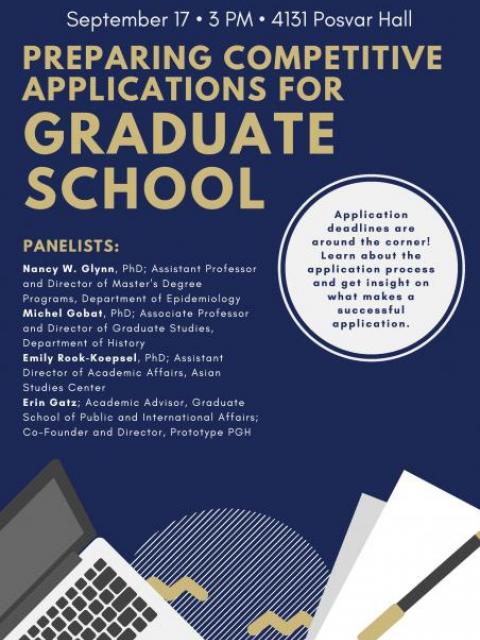
Preparing Competitive Applications for Graduate School
Presenter: Nancy W. Glynn, Michel Gobat, Emily Rook-Koepsel, Erin Gatz
Location: 4130 Posvar Hall
This multidisciplinary panel will provide insight into crafting competitive applications for
graduate school. You will learn how to leverage your personal story,
GRE/GMAT scores, recommendation letters, and leadership experience
into successful applications. With these tips and tools, you will be one
step closer to an advanced degree. Make sure to add this important
event to your calendar!
Saturday, September 15th, 2018
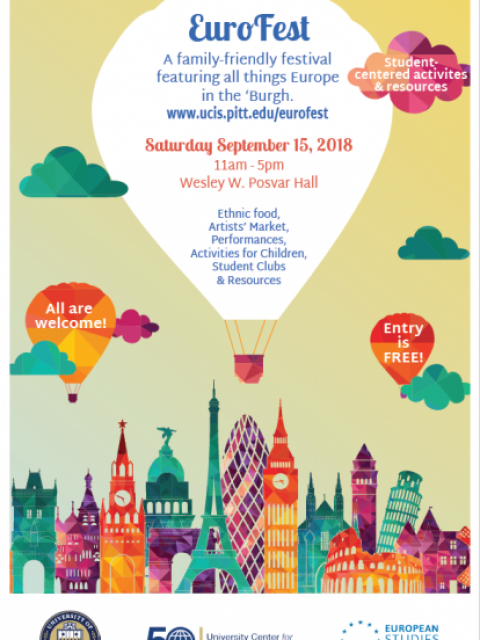
Euro Fest at the University of Pittsburgh
Time: 11:00 am to 5:00 pm
Location: Posvar Hall, 230 S. Bouquet Street
Cost: Free and open to the public
Join us for our 3rd Annual EuroFest!
EuroFest is a family friendly festival featuring all things Europe in the ‘Burgh. Local artisans and vendors will create a dynamic marketplace and performances of song and dance will be presented on the main stage. Food booths featuring various European cuisines will be participating and artistic demonstrations and children’s activities will take place throughout the day.
Free and open to the public!
For more information visit https://www.ucis.pitt.edu/esc/events/eurofest
Thursday, September 13th, 2018
Party Discipline in the European Parliament: The Challenges of Accountability Beyond the State
Time: 12:00 pm to 1:30 pm
Presenter: Einion Dfydd, Lecturer, Cardiff University
Location: 4217 Wesley W. Posvar Hall
Friday, September 7th, 2018
ESC Opening Reception
Location: 4130 Wesley W. Posvar Hall
Cost: Free and open to the public
The staff of the European Studies Center invite you to attend a reception to usher in the 2018-19 academic year. All interested faculty, staff, students, alumni, and members of the ESC community are welcome to attend. Refreshments will be served.
Thursday, July 19th, 2018 to Friday, July 20th, 2018
Patching the Liberal World Order: How Can International Cooperation Pwn Emerging Cyber Challenges
Jean Monnet Center of Excellence Workshop
Presenter: Michael Colaresi, Political Science and various
Location: William Pitt Union, Lower Lounge and Croghan-Schenley Room, CoL
Cost: Free and open to the public
The computing and digital revolutions have created new tools and capabilities that are challenging the liberal world order. If the Cold War was an era of static state superpowers, modern computing gives not only developed states but even a moderately trained rebel group their own superpowers: to teleport their presence around the globe, move vast sums of money instantly, and make evidence vanish. From Wikileaks to the hacking of elections, headlines across the democratic world have highlighted transnational cyber-enabled crime, violence and polarization. The goal of this workshop is to bring scholars together from a variety of backgrounds to discuss whether current concepts and theories are sufficient to suggest solutions to these cyber dilemmas, particularly for open liberal democracies. Topics would include current and emerging cyber security challenges like hacking, election manipulation and disinformation, cyber crime, online radicalization, as well as topics related to domestic and international trust and distrust, including intelligence cooperation, surveillance, repression, leaking and whistle-blowing, evolving alliance commitments and rivalries. One cross-cutting theme that will be of particular interest is how the tools and technologies maintained by international cooperation and liberal societies, such as the internet, open source software and free social media, are being used to undercut governance and bipartisanship; and what can be done about it.
Saturday, May 5th, 2018
Interdisciplinary Global Working Group for Educators
What does it mean for a course, module, or lesson to be “global’? In part, it means looking at a question from multiple lenses—whether political, economic, social, cultural, ecological, or other. What better way to approach global curriculum planning (and to model collaborative learning for our students!) than to partner with colleagues from other disciplines in the same school? The University Center for International Studies at Pitt is offering a new program that will provide teachers with the time, space, and material support to gather with like-minded colleagues and (re)design an interdisciplinary, global unit or lesson. Science and French teachers might team up to offer a lesson on global warming in the francophone world; or Art, English, and Social Studies teachers might develop a unit on responses to the global refugee crisis in art and literature. We are looking forward to hearing your ideas!
Free parking, Act 48 credit hours, $300 stipend, and a mini-grant (up to $200 for your team) for curricular materials of your choosing.
Global Interdisciplinary Working Group
What does it mean for a course, module, or lesson to be “global’? In part, it means looking at a question from multiple lenses—whether political, economic, social, cultural, ecological, or other. What better way to approach global curriculum planning (and to model collaborative learning for our students!) than to partner with colleagues from other disciplines in the same school? The University Center for International Studies at Pitt is offering a new program that will provide teachers with the time, space, and material support to gather with like-minded colleagues and (re)design an interdisciplinary, global unit or lesson. Science and French teachers might team up to offer a lesson on global warming in the francophone world; or Art, English, and Social Studies teachers might develop a unit on responses to the global refugee crisis in art and literature. We are looking forward to hearing your ideas!
We are currently accepting applications from teams of 2-4 teachers. We will meet three Saturday mornings (3/3, 4/7, and 5/5) from 9-12noon, and new content must be taught in the 2018-2019 school year. At each meeting, you will work intensively with your teammates, receive feedback from other participants, and learn about strategies for interdisciplinary teaching. We welcome teams that include teachers, librarians, curriculum development specialists, and/or administrative personnel. Ideally, each member of the team should interact with the same group of students.
Friday, April 27th, 2018
UCIS Graduation Celebration
Location: Ballroom, O'Hara Student Center
Students from all UCIS centers graduating in Spring and Summer 2018 are invited with their families to join this UCIS wide ceremony celebrating their completion of the certificate or BPHIL/IAS.
Tuesday, April 24th, 2018
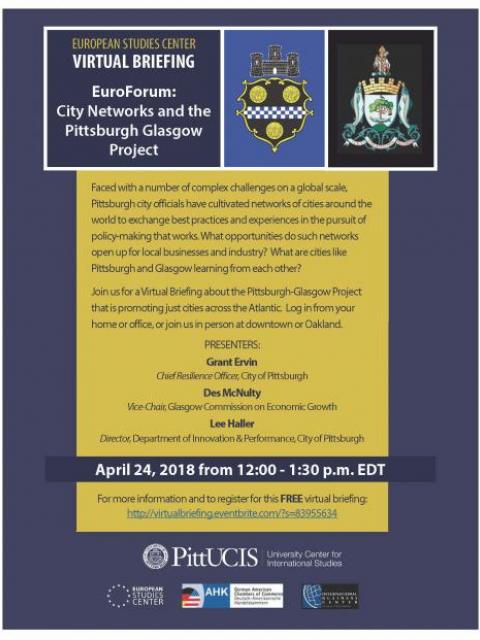
EuroForum: City Networks and the Pittsburgh Glasgow Project
Time: 12:00 pm to 1:30 pm
Presenter: Grant Ervin, Des McNulty, Lee Haller
Location: Virtual Briefing
For more information and to register for this FREE virtual briefing: http://virtualbriefing.eventbrite.com/?s=83955634
Faced with a number of complex challenges on a global scale, Pittsburgh city officials have cultivated networks of cities around the world to exchange best practices and experiences in the pursuit of policy-making that works. What opportunities do such networks open up for local businesses and industry? What are cities like Pittsburgh and Glasgow learning from each other?
Join us for a Virtual Briefing about the Pittsburgh-Glasgow Project that is promoting just cities across the Atlantic. Log in from your home or office, or join us in person at downtown or Oakland.
PRESENTERS:
Grant Ervin
Chief Resilience Officer, City of Pittsburgh
Des McNulty
Vice-Chair, Glasgow Commission on Economic Growth
Lee Haller
Director, Department of Innovation & Performance, City of Pittsburgh
Monday, April 23rd, 2018
Author Visit - EU Prize for Literature: 2018 CES Book Choice
Presenter: Marente du Moor, Author of The Dutch Maiden
Location: Carnegie Library of Oakland, South Wing Reading Room
Cost: Free and open to the public
Saturday, April 21st, 2018 to Monday, April 23rd, 2018
Italian Film Festival 2018
Announced by:
on behalf of
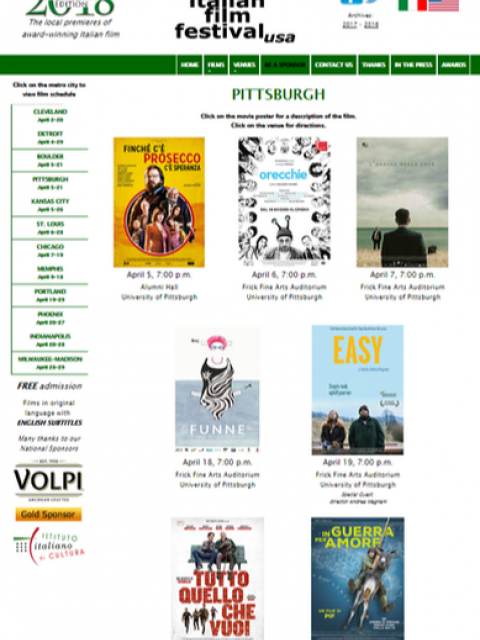
MOVIE SCHEDULE:
Thursday April 5th - 7pm FINCHE' C'E' PROSECCO (The Last Prosecco) @ Alumni Hall
Friday April 6th - 7pm EARS - ORECCHIE (Ears) @ Frick Fine Arts Auditorium
Saturday April 7th - 7pm L'ORDINE DELLE COSE (The Order of Things) @ Frick Fine Arts Auditorium
Wednesday April 18th - 7pm FUNNE, LE RAGAZZE CHE SOGNAVANO IL MARE (Funne, Sea Dreaming Girls) @ Frick Fine Arts Auditorium
Thursday April 19th - 7pm EASY @ Frick Fine Arts Auditorium
Friday April 20th - 7pm TUTTO QUELLO CHE VUOI (Friends By Chance) @ Frick Fine Arts Auditorium
Saturday April 21st - 7pm IN GUERRA PER AMORE (At War for Love) @ Frick Fine Arts Auditorium
Questions about the festival? Contact Pittsburgh's Spotlight Sponsor of the Festival, Istituto Mondo Italiano, at mondoitaliano@earthlink.net.
Saturday, April 21st, 2018
French Immersion Institute Workshop
Presenter: Bénédicte Barlat, Directrice - Centre Francophone de Pittsburgh
Location: Posvar 4130, University of Pittsburgh
Samedi 3 mars 2018:
La situation linguistique et culturelle en Bretagne, Dr. Sébastien Dubriel, Université de Carnegie-Mellon
Samedi 21 avril 2018:
Françoise Giroud & Simone Veil: deux écrivaines politiques pour la couse des femmes
Conférencière: Bénédicte Barlat, Directrice - Centre Francophone de Pittsburgh
Program runs from 9:00-13:30, with an 8:30 breakfast and 12:30 lunch included.
Registration deadlines: February 26th for March 3rd workshop; April 16th for April 21st workshop.
Enclose a $20.00 check for each program ($40.00 for both). Fee includes ACT 48 credit-4 -hours for each program, breakfast and lunch.) Send check payable to the University of Pittsburgh. To facilitate our records, please write on check memo: (French Immersion)
Bonnie Adair-Hauck: adairhauck@gmail.com
Friday, April 20th, 2018 to Sunday, April 22nd, 2018
Italian Film Festival 2018
Announced by:
on behalf of
MOVIE SCHEDULE:
Thursday April 5th - 7pm FINCHE' C'E' PROSECCO (The Last Prosecco) @ Alumni Hall
Friday April 6th - 7pm EARS - ORECCHIE (Ears) @ Frick Fine Arts Auditorium
Saturday April 7th - 7pm L'ORDINE DELLE COSE (The Order of Things) @ Frick Fine Arts Auditorium
Wednesday April 18th - 7pm FUNNE, LE RAGAZZE CHE SOGNAVANO IL MARE (Funne, Sea Dreaming Girls) @ Frick Fine Arts Auditorium
Thursday April 19th - 7pm EASY @ Frick Fine Arts Auditorium
Friday April 20th - 7pm TUTTO QUELLO CHE VUOI (Friends By Chance) @ Frick Fine Arts Auditorium
Saturday April 21st - 7pm IN GUERRA PER AMORE (At War for Love) @ Frick Fine Arts Auditorium
Questions about the festival? Contact Pittsburgh's Spotlight Sponsor of the Festival, Istituto Mondo Italiano, at mondoitaliano@earthlink.net.
Friday, April 20th, 2018
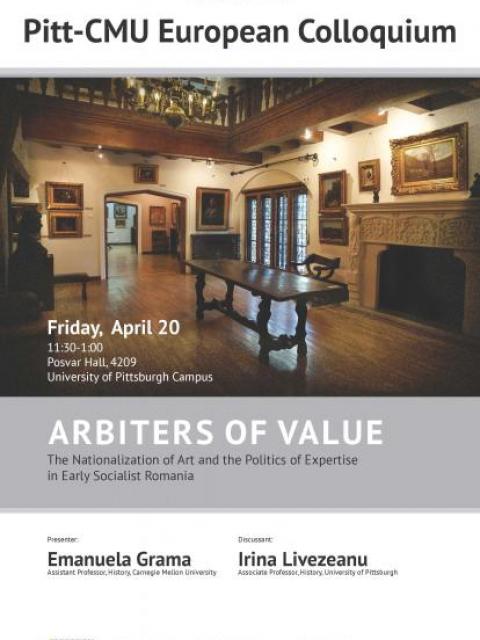
European Colloquium Session
Time: 11:30 am to 1:00 pm
Presenter: Irina Livezeanu, Department of History
Location: 4209 Posvar Hall
Thursday, April 19th, 2018 to Saturday, April 21st, 2018
Italian Film Festival 2018
Announced by:
on behalf of
MOVIE SCHEDULE:
Thursday April 5th - 7pm FINCHE' C'E' PROSECCO (The Last Prosecco) @ Alumni Hall
Friday April 6th - 7pm EARS - ORECCHIE (Ears) @ Frick Fine Arts Auditorium
Saturday April 7th - 7pm L'ORDINE DELLE COSE (The Order of Things) @ Frick Fine Arts Auditorium
Wednesday April 18th - 7pm FUNNE, LE RAGAZZE CHE SOGNAVANO IL MARE (Funne, Sea Dreaming Girls) @ Frick Fine Arts Auditorium
Thursday April 19th - 7pm EASY @ Frick Fine Arts Auditorium
Friday April 20th - 7pm TUTTO QUELLO CHE VUOI (Friends By Chance) @ Frick Fine Arts Auditorium
Saturday April 21st - 7pm IN GUERRA PER AMORE (At War for Love) @ Frick Fine Arts Auditorium
Questions about the festival? Contact Pittsburgh's Spotlight Sponsor of the Festival, Istituto Mondo Italiano, at mondoitaliano@earthlink.net.
Tuesday, April 17th, 2018
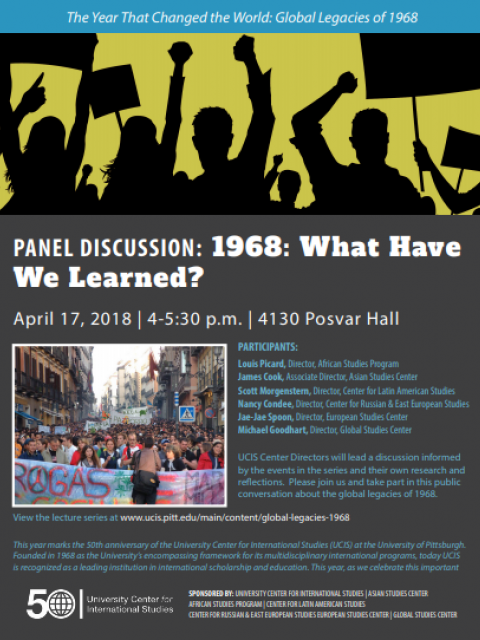
1968: What Have We Learned
Presenter: Louis Picard, James Cook, Jae-Jae Spoon, Michael Goodhart, Scott Morgenstern, Nancy Condee
Cost: Free and open to the public
UCIS Center Directors will lead a discussion informed by the events in the series and their own research and reflections. Please join us and take part in this public conversation about the global legacies of 1968.
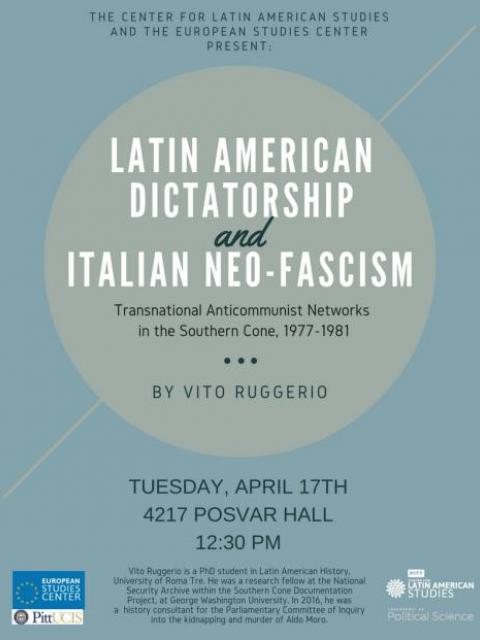
Latin American Dictatorship and Italian Neo-Fascism
Transnational Anticommunist Networks in the Southern Cone, 1977-1981
Time: 12:30 pm to 1:30 pm
Location: 4217 Posvar Hall
LATIN AMERICAN DICTATORSHIP AND ITALIAN NEO-FASCISM:
Transnational Anticommunist Networks in the Southern Cone, 1977-1981
By Vito Ruggerio
TUESDAY, APRIL 17TH
4217 POSVAR HALL
12:30 PM
Vito Ruggerio is a PhD student in Latin American History, University of Roma Tre. He was a research fellow at the National Security Archive within the Southern Cone Documentation Project, at George Washington University. In 2016, he was a history consultant for the Parliamentary Committee of Inquiry
LATIN AMERICAN DICTATORSHIP ITALIAN NEO-FASCISM
Transnational Anticommunist Networks in the Southern Cone, 1977-1981
Presenter: V I T O R U G G E R I O
Location: 4217 Posvar Hall
Vito Ruggerio is a PhD student in Latin American History, University of Roma Tre. He was a research fellow at the National Security Archive within the Southern Cone Documentation
Project, at George Washington University. In 2016, he was a history consultant for the Parliamentary Committee of Inquiry into the kidnapping and murder of Aldo Moro.
Monday, April 16th, 2018
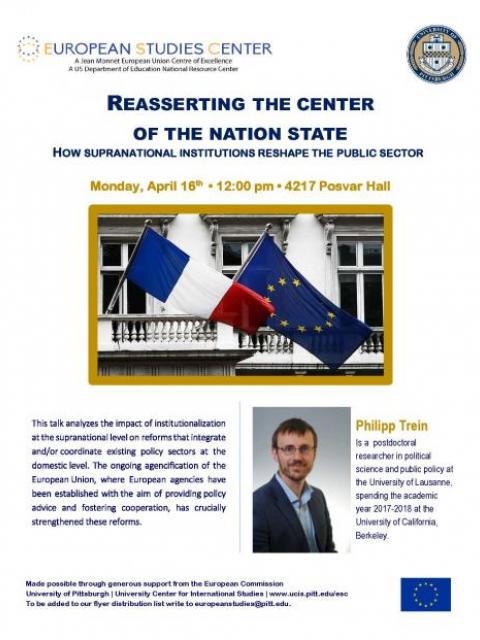
Reasserting the center of the nation state: How supranational institutions reshape the public sector
Presenter: Philipp Trein, University of Lausanne
Location: 4217 Posvar Hall
Cost: Free and open to the public
In this talk, I will analyze the impact of institutionalization at the supranational level on reforms that integrate and/or coordinate existing policy sectors at the domestic level. More specifically, I argue that the ongoing agencification of the European Union, where European agencies have been established with the aim of providing policy advice and fostering cooperation, has crucially strengthened these reforms. To examine this hypothesis, I present the results of multilevel analyses that estimate reform activity concerning policy integration and administrative coordination using an original dataset that compares four policy fields – environment, immigration, public health, and unemployment – in thirteen countries (eight EU members and five non-EU members) covering the period from 1985-2014. Overall, the results point to varying patterns of integration and coordination at the nation-state level and to the differential importance of agencification at supranational level.
Friday, April 13th, 2018
European and Eurasian Undergraduate Research Symposium 2018
Location: 527, 538, and 548 WPU
Cost: Free and open to the public
The European and Eurasian Undergraduate Research Symposium is an annual event designed to provide undergraduate students, from the University of Pittsburgh and other colleges and universities, with advanced research experiences and opportunities to develop presentation skills. The event is open to undergraduates from all majors and institutions who have written a research paper from a social science, humanities, or business perspective focusing on the study of Eastern, Western, or Central Europe, the European Union, Russia, or other countries of the former Soviet Union. Selected participants will give 10- to 15-minute presentations based on their research to a panel of faculty and graduate students. The presentations are open to the public.
Thursday, April 12th, 2018 to Saturday, April 14th, 2018
Italian Film Festival 2018
Announced by:
on behalf of
MOVIE SCHEDULE:
Thursday April 5th - 7pm FINCHE' C'E' PROSECCO (The Last Prosecco) @ Alumni Hall
Friday April 6th - 7pm EARS - ORECCHIE (Ears) @ Frick Fine Arts Auditorium
Saturday April 7th - 7pm L'ORDINE DELLE COSE (The Order of Things) @ Frick Fine Arts Auditorium
Wednesday April 18th - 7pm FUNNE, LE RAGAZZE CHE SOGNAVANO IL MARE (Funne, Sea Dreaming Girls) @ Frick Fine Arts Auditorium
Thursday April 19th - 7pm EASY @ Frick Fine Arts Auditorium
Friday April 20th - 7pm TUTTO QUELLO CHE VUOI (Friends By Chance) @ Frick Fine Arts Auditorium
Saturday April 21st - 7pm IN GUERRA PER AMORE (At War for Love) @ Frick Fine Arts Auditorium
Questions about the festival? Contact Pittsburgh's Spotlight Sponsor of the Festival, Istituto Mondo Italiano, at mondoitaliano@earthlink.net.
Wednesday, April 11th, 2018
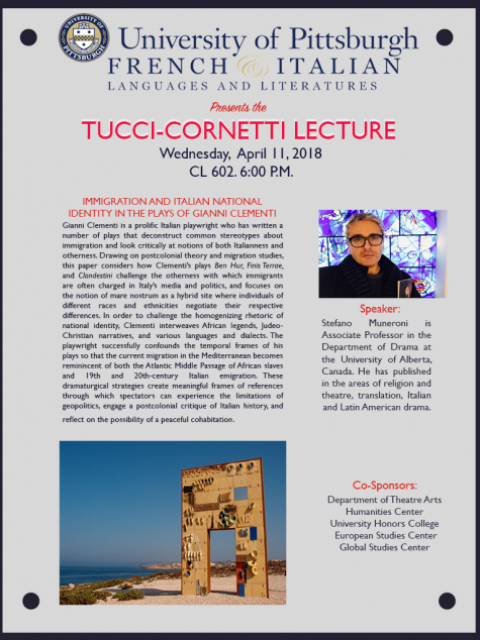
The Tucci-Cornetti Lecture
Immigration and Italian National Identity in the Plays of Gianni Clementi
Presenter: Stefano Muneroni, Associate Professor in the Department of Drama, University of Alberta
Location: 602 Cathedral of Learning
Gianni Clementi is a prolific Italian playwright who has written a number of plays that deconstruct common stereotypes about immigration and look critically at notions of both Italianess and otherness. Drawing on postcolonial theory and migration studies, this paper considers how Clementi's plays, "Ben Hur", "Finis Terrae" and "Clandestini" challenge the otherness with which immigrants are often charged in Italy's media and politics and focuses on the notion of mare nostrum as a hybrid site where individuals of different races and ethnicities negotiate their respective differences.
In order to challenge the homogenizing rhetoric of national identity, Clementi interweaves African legends, Judeo-Christian narratives, and various languages and dialects. The playwright successfully confounds the temporal frames of his plays so that the current migration in the Mediterranean becomes reminiscent of both the Atlantic Middle Passage of African slaves and the 19th and 20th-century Italian emigration. These dramaturgical strategies create meaningful frames of reference through which spectators can experience the limitations of geopolitics, engage with a postcolonial critique of Italian history, and reflect on the possibility of peaceful cohabitation.
Professional Development Webinars - Doing Research on Eastern Europe in the EU: Research Infrastructures, Grant Models, and Career Mobility
Presenter: Dr. Peter Haslinger, Director, Herder Institute
Location: http://aseees.org/programs/webinars
This webinar is the third in a professional development series co-sponsored by the American Association for Slavic, East European, and Eurasian Studies and the European Studies Center. This webinar will focus on career patterns in academia as well as in the field of infrastructure development in EU-countries. Participants will learn about the formats, chances and challenges for developing a strategy for one’s transnational career path. Against this backdrop and providing significant examples, Peter Haslinger will explain about bilateral and cross-European funding programs - this will also include some thoughts about advancing transatlantic exchange in the field of Eastern European Studies.
Speaker's Bio: Peter Haslinger is Professor of East-Central European History at the Justus Liebig University Giessen and Director of the Herder Institute in Marburg, a research institution affiliated with the Leibniz Association and specializing in the history, art history and digital humanities of East Central Europe. Dr. Haslinger is Principal Investigator at the Giessen Center for Eastern European Studies, the International Center for the Study of Culture, and the Center for Media and Interactivity, all located at the Justus Liebig University. He likewise functions as a spokesperson for the Herder Institute Research Academy, which aims to bridge the gap between scholarship in Eastern European Studies and the development of research infrastructures. His scholarly interest focuses on the history of the Habsburg Monarchy and successor states in the 19th and 20th centuries. He has published widely on Hungarian, Czech and Slovak history as well as on questions of nation, region and cultural diversity, on cartography and questions of security. Dr. Haslinger is the spokesperson for the project group that enhances the visibility of Eastern European Studies across disciplines within the Leibniz Association. He is likewise involved in activities for the enhancement of the Humanities and Social Sciences on the European level, among others as a member of the Humanities in the European Research Area (HERA) Network board.
Webinars scheduled for Fall 2018:
August
How to Work in Archives in Eastern Europe and Germany
September
Archival Skills
October
Strategies for Career Building and Publishing in the EU versus the US
Tuesday, April 10th, 2018
2018 Symposium Series: Connecting the Local and the Global I
Time: 12:00 pm to 2:00 pm
Presenter: Christopher Chirdon, Zheng Li
Location: 4119 Wesley W. Posvar Hall (IISE Seminar Room)
This event is free and open to public. Two presentations will be given on that day:
Challenging Car Culture: Shifting Bikes into the US Cultural Norm-- by SCAE Ph.D. student, Christopher Chirdon
A Qualitative Study on the Knowledge Structure of Front-Line Workers in Service Occupations-- by IISE Visiting Scholar, Zheng Li
Saturday, April 7th, 2018
Interdisciplinary Global Working Group for Educators
What does it mean for a course, module, or lesson to be “global’? In part, it means looking at a question from multiple lenses—whether political, economic, social, cultural, ecological, or other. What better way to approach global curriculum planning (and to model collaborative learning for our students!) than to partner with colleagues from other disciplines in the same school? The University Center for International Studies at Pitt is offering a new program that will provide teachers with the time, space, and material support to gather with like-minded colleagues and (re)design an interdisciplinary, global unit or lesson. Science and French teachers might team up to offer a lesson on global warming in the francophone world; or Art, English, and Social Studies teachers might develop a unit on responses to the global refugee crisis in art and literature. We are looking forward to hearing your ideas!
Free parking, Act 48 credit hours, $300 stipend, and a mini-grant (up to $200 for your team) for curricular materials of your choosing.
Global Interdisciplinary Working Group
What does it mean for a course, module, or lesson to be “global’? In part, it means looking at a question from multiple lenses—whether political, economic, social, cultural, ecological, or other. What better way to approach global curriculum planning (and to model collaborative learning for our students!) than to partner with colleagues from other disciplines in the same school? The University Center for International Studies at Pitt is offering a new program that will provide teachers with the time, space, and material support to gather with like-minded colleagues and (re)design an interdisciplinary, global unit or lesson. Science and French teachers might team up to offer a lesson on global warming in the francophone world; or Art, English, and Social Studies teachers might develop a unit on responses to the global refugee crisis in art and literature. We are looking forward to hearing your ideas!
We are currently accepting applications from teams of 2-4 teachers. We will meet three Saturday mornings (3/3, 4/7, and 5/5) from 9-12noon, and new content must be taught in the 2018-2019 school year. At each meeting, you will work intensively with your teammates, receive feedback from other participants, and learn about strategies for interdisciplinary teaching. We welcome teams that include teachers, librarians, curriculum development specialists, and/or administrative personnel. Ideally, each member of the team should interact with the same group of students.
Thursday, April 5th, 2018 to Saturday, April 7th, 2018
Italian Film Festival 2018
Announced by:
on behalf of
MOVIE SCHEDULE:
Thursday April 5th - 7pm FINCHE' C'E' PROSECCO (The Last Prosecco) @ Alumni Hall
Friday April 6th - 7pm EARS - ORECCHIE (Ears) @ Frick Fine Arts Auditorium
Saturday April 7th - 7pm L'ORDINE DELLE COSE (The Order of Things) @ Frick Fine Arts Auditorium
Wednesday April 18th - 7pm FUNNE, LE RAGAZZE CHE SOGNAVANO IL MARE (Funne, Sea Dreaming Girls) @ Frick Fine Arts Auditorium
Thursday April 19th - 7pm EASY @ Frick Fine Arts Auditorium
Friday April 20th - 7pm TUTTO QUELLO CHE VUOI (Friends By Chance) @ Frick Fine Arts Auditorium
Saturday April 21st - 7pm IN GUERRA PER AMORE (At War for Love) @ Frick Fine Arts Auditorium
Questions about the festival? Contact Pittsburgh's Spotlight Sponsor of the Festival, Istituto Mondo Italiano, at mondoitaliano@earthlink.net.
Thursday, April 5th, 2018
Italian Cheese Night
Location: Cathedral Views Gallery - Alumni Hall
Cost: Free to Pitt students, $2 for non-Pitt students
Pitt Italian Club is hosting a Cheese Night on Thurs, April 5th at the Cathedral Views Gallery in Alumni Hall at 6-7pm. The event is free to all Pitt students and costs $2 per non-Pitt student. The Cheese Night is right before the opening film of the Italian Film Festival on the same night, so participants are welcome to stay to watch the film after the event.
Register to attend at Eventbrite: https://www.eventbrite.com/e/cheese-night-tickets-43317661291
Wednesday, April 4th, 2018
Global Issues Through Literature: Authors Under Authoritarianism
Home Fire by Kamila Shamsie
Presenter: Jeanette Jouili
Location: 4130 Posvar Hall
What is life like under authoritarian regimes, especially for writers, artists, and other creative thinkers whose aim is to loosen, bend, and even break the rules? Do harsh regulations constrict or condone innovative artistic practices? How can authors subvert authoritarianism through writing? What happens if they get caught? This year’s Global Issues Through Literature series, a reading group designed for K-12 educators to learn and use new texts in the classroom, will travel the world through the eyes of authors writing under authoritarianism to try to understand the role of literature as document, commentator, and critic of restrictive regimes.
For this session we will read Home Fire by Kamila Shamsie and hear from Pitt Prof. Jeanette Jouili (Religious Studies).
Tuesday, April 3rd, 2018
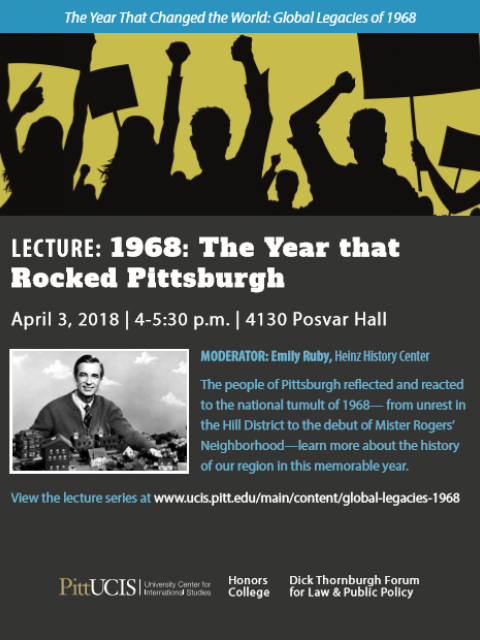
1968: The Year that Rocked Pittsburgh
Location: 4130 Posvar Hall
Presented by Emily Ruby or the Heinz History Center. Part of the Global Legacies of 1968 Series, sponsored by the University Honors College.
Thursday, March 29th, 2018
European Climate Politics and Activism from Local to Global
Presenter: Stacy VanDeveer, University of Massachusetts Boston
Location: 4217 Wesley W. Posvar Hall
Cost: Free and open to the public
European climate and energy policies have been leading the world for several years, and climate activism has long been visible in many European cities and campuses. So what’s new in EU climate policy and activism? What’s next for EU climate politics in the age of the Trump Administration’s global gaslighting?
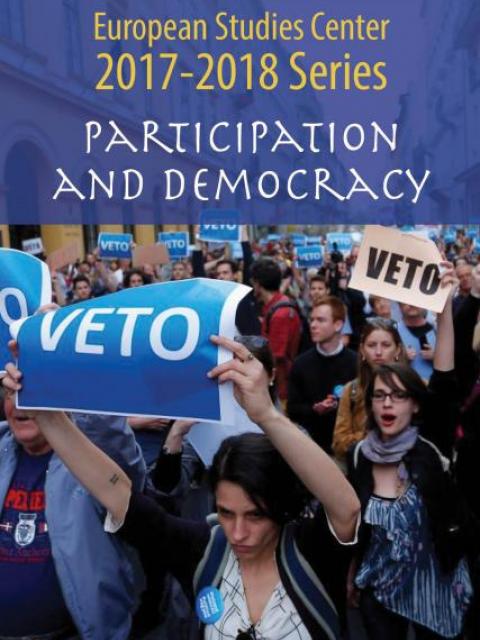
Funded through the ESC's Jean Monnet Center of Excellence Grant, this lecture is part of the Center's Participation and Democracy 2017-18 Series.
Tuesday, March 27th, 2018
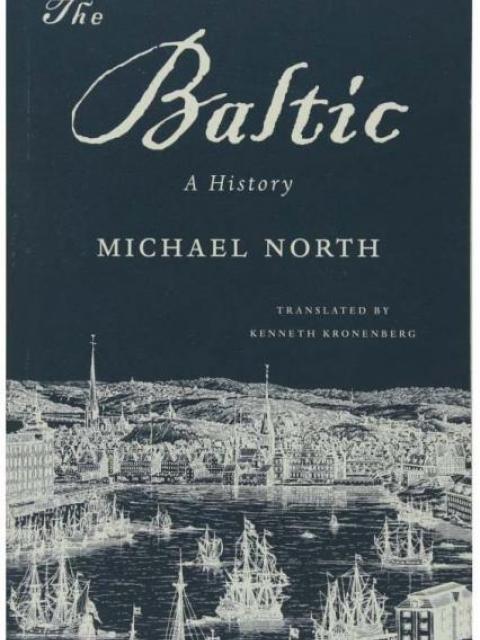
Connected Seas: the Baltic Sea in a wider Oceanic World
Presenter: Michael North, Professor of History, University of Greifswald, Germany
Location: 232 Cathedral of Learning
Professor North, currently a teaching fellow at UC Santa Barbara, is Chair of Modern History at the Moritz Arndt University Greifswald, Director of the Graduate Program “Contact Area Mare Balticum: Foreignness and Integration in the Baltic Region” and Director of the Interdisciplinary Research Training Group “Baltic Borderlands: Shifting Boundaries of Mind and Culture in the Borderlands of the Baltic Sea Region.”