Thinking about law school? Have questions about the LSAT? Join us and the School of Law for an information session on how to make your law school application stand out!
Tuesday, November 15th, 2022
Applying to Law School Information Session

Time:
12:00 pm to 1:00 pm
Presenter:
Charmaine Mccall, Assistant Dean of Admissions and Financial Aid at School of Law
Location:
4130 Posvar Hall
Sponsored by:
Asian Studies Center, Center for African Studies, Center for Latin American Studies, Center for Russian East European and Eurasian Studies, European Studies Center, Global Studies Center, UCIS Engagement and International Week along with University of Pittsburgh School of Law and UCIS International Career Toolkit Series
Contact:
Elaine Linn
Contact Email:
eel58@pitt.edu
Friday, November 11th, 2022
2022-2023 MEET EU EMERGING FILMMAKER- Night Ride (Noćna vožnja)

Time:
5:00 pm to 6:30 pm
Presenter:
Vida Skerk, Director
Location:
125 Frick Arts Building
Sponsored by:
European Studies Center and European Union Center of Excellence
Contact:
Pawel Lewicki
Contact Email:
pawel.lewicki@pitt.edu
2022-2023 MEET EU EMERGING FILMMAKER
In partnership with the Jean Monnet Center of Excellence at Florida International University, Center for European Studies of the University of North Carolina-Chapel Hill and University of Pittsburgh’s European Studies Center, this year's MEET EU Emerging Filmmaker Residency goes to Vida Skerk from Zagreb Croatia.
The European Studies Center will be featuring her 2022 short film Night Ride (Noćna vožnja), a discussion with the director and reception to follow in the Frick Arts Cloister.
About: Night Ride explores quarter-life identity crisis through the perspective of a twentysomething student in Croatia. Dunja, the main character, questions her decision to move to a bigger city and regrets leaving behind the safety of her hometown where she could always count on the support of her close friend, Sara.
Exploring the “borders” and boundaries, the film is constructed as a series of dreams and nightmares which evade a linear narrative structure and retain the qualities of a more stream-of-consciousness approach, presenting to the viewer Dunja’s inner world in its most authentic, raw and honest form.
Thursday, November 10th, 2022
Caffe e Biscotti
Time:
7:00 am to 9:00 am
Sponsored by:
European Studies Center and Global Hub
Wednesday, November 9th, 2022
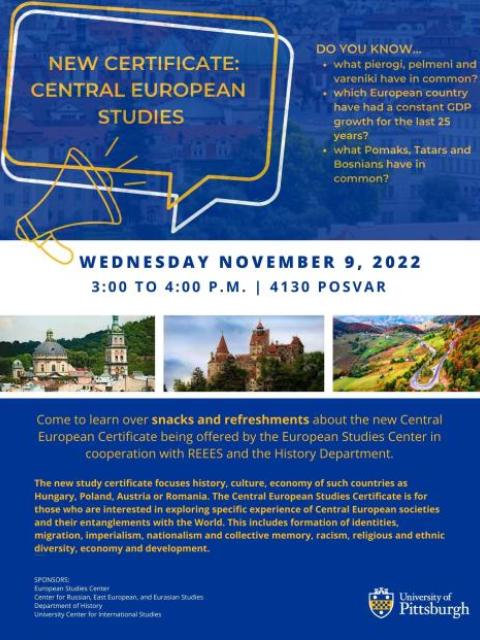
Central European Certificate Event
Time:
3:00 pm to 4:00 pm
Location:
4130 Posvar
Sponsored by:
Center for Russian East European and Eurasian Studies, European Studies Center and European Union Center of Excellence along with History Department and Center for Russian and East European Studies
Contact:
Pawel Lewicki
Contact Email:
pawel.lewicki@pitt.edu
The European Studies Center in cooperation with Russian, East European and Eurasian Studies and History Department is launching a new study certificate focused on history, culture, economy, and their entanglements of and in central Europe - historically, politically and culturally the most diverse and dynamic region of Europe since 1800s that can be placed between Russian, Ottoman, German, and Habsburg empires, between Rhine and Dnepr and Baltic and Adriatic Seas. It is a place where two world wars started and genocides took place, where Cold War started and ended and where European integration emerged with its new dynamic. What insights can we gain on Europe and the world by looking at this region? The Central European Studies Certificate is for those students who are interested in exploring specific experience of Central European societies. This includes formation of identities, migration, nationalism, and collective memory, racism, religious and ethnic diversity, economy development in variety of political, artistic, and social forms.
Tuesday, November 8th, 2022
Queer Filmmaking Panel

Time:
8:00 pm to 9:30 pm
Presenter:
Vida Skerk with SCENE and RAINBOW ALLIANCE
Location:
4130 Posvar Hall
Sponsored by:
European Studies Center and European Union Center of Excellence along with Rainbow Alliance; SCENE Pitt Film Club
Contact:
Pawel Lewicki
Contact Email:
pawel.lewicki@pitt.edu
Queer Filmmaking Panel:
Featuring: Vida Skerk, the 2022-23 MEET EU Emerging Filmmaker, SCENE, and Rainbow Alliance.
The panel will discuss being queer in the film industry and creating queer content.
CANCELED-Conversation on Europe: "A just Transition for Clean Energy"
Time:
12:00 pm
Presenter:
Michael Aklin
Location:
Zoom Webinar
Sponsored by:
European Studies Center
Contact:
Josephine Olson
Contact Phone:
4126481715
Contact Email:
jolson@pitt.edu
Decarbonizing the economy requires a dramatic transformation of the global economy. Phasing out fossil fuels implies the reallocation of millions of workers who will need to find new jobs. Unions and other policymakers have therefore called for a “just transition”: a clean energy transition that takes into account the challenges faced by those whose jobs are at risk. The European Union has recognized the problem and is implementing a Just Transition Mechanism which is expected to raise 55 billion euros (about $58 billion). In the United States, states such as Colorado have designed bureaus to manage a just transition.
In this rapidly changing landscape, several questions become critical: How can such a large labor market shock be absorbed? What can we learn from the managed decline in coal in countries like Germany? How should we design just transition institutions? Are they even needed?
Moderator: Michael Aklin, University of Pittsburgh
Panelist: TBD
Thursday, November 3rd, 2022
Creating Europe Speaker Series: "Civilizationism: A History of the Present"

Time:
3:00 pm
Presenter:
Dr. Asli Igsiz, Associate Professor of Middle Eastern Studies, New York University
Location:
4130 Posvar
Sponsored by:
European Studies Center and European Union Center of Excellence
Contact:
Pawel Lewicki
Contact Email:
pawel.lewicki@pitt.edu
Whether identified as ethnonationalist, pan-European, anti-colonial, or or pan-Islamic, "civilizationist" identification is in the foreground of many nationalist, racist, often white supremist narratives. Such approaches to identification extract concepts and mechanisms from earlier nationalist projects and feed them into the larger narratives of civilizationism taking hold today. While doing so, they tend to reproduce a radicalized approach to history, art, literature, material culture, and demography. This talk will address the broader implications of "civilizationism" with a historicist approach.
Wednesday, November 2nd, 2022
I Stand with Immigrants
Time:
10:00 am
Location:
Pitt Global Hub, 1st Floor Posvar Hall
Sponsored by:
Asian Studies Center, Center for Ethnic Studies Research, Center for African Studies, Center for Latin American Studies, Center for Russian East European and Eurasian Studies, European Studies Center, Global Studies Center and Global Hub along with University Center for International Studies
How have immigrants inspired you? Come support immigrants with an activity and have your photo shared on our social media.
Wednesday, October 26th, 2022
Pitt Model United Nations 2022
Time:
7:30 am to 3:00 pm
Location:
William Pitt Union, Pitt-Oakland Campus
Sponsored by:
Asian Studies Center, Center for African Studies, Center for Latin American Studies, Center for Russian East European and Eurasian Studies, European Studies Center, European Union Center of Excellence, Global Studies Center, UCIS Engagement and National Consortium on Teaching About Asia along with PittMUN Club
Contact:
UCIS Engagement
Contact Email:
ucisengage@pitt.edu
Through experiential learning, high school students engage directly with global issues by assuming the role of world leaders and negotiating responses to timely topics.
Thursday, October 20th, 2022
Re-imagining Communities in the Neoliberal Era: The Decline of Social Democracy, the Rise of the Populist Right and the Fate of Democracy

Time:
4:00 pm
Presenter:
Sheri Berman, Barnard College, Columbia University
Location:
4130 Posvar Hall
Sponsored by:
European Studies Center and European Union Center of Excellence
Contact:
Ingrid Gomez-O'Toole
Contact Phone:
412-648-8517
Contact Email:
ing7@pitt.edu
Over the past decades, Western democracies have experienced dramatic change. In Europe, the most obvious is the decline of the mainstream parties, particularly those on the center-left, that long anchored and defined politics in the region. This talk will examine the reasons for the decline of center-left or social democratic parties in Europe, stressing the role played by these parties changing ideas about the nature of the economy and society.
These changing ideas, I will argue, created incentives and opportunities for new parties, particularly on the populist right, to change their own platforms and appeals in ways that helped reshape how citizens viewed themselves and their relationships with their fellow citizens.
Place Based Conference - Universities: How can we take a people-centered approach to engage with our places?

Time:
(All day)
Sponsored by:
Director's Office, European Studies Center and International Week
Join University of Pittsburgh, Newcastle University in the United Kingdom, and colleagues from across the globe for a virtual collaborative conference on 19 - 20 October.
Building on last year’s conference we will explore and share best practices on how Universities advance place-based approaches through community and student engagement and importantly how we measure our impact and demonstrate accountability to our communities and stakeholders.
The conference will include a program of concurrent sessions focused on the themes of sustainability, health, culture and cities and places. Plenary sessions will draw upon the role universities play in their place, looking at a range of international contexts and approaches to impact and evaluation.
Register for the event at https://newcastle-pittsburgh.online-event.co/registration/universities-h...
Wednesday, October 19th, 2022
Place Based Conference - Universities: How can we take a people-centered approach to engage with our places?

Time:
(All day)
Sponsored by:
Director's Office, European Studies Center and International Week
Join University of Pittsburgh, Newcastle University in the United Kingdom, and colleagues from across the globe for a virtual collaborative conference on 19 - 20 October.
Building on last year’s conference we will explore and share best practices on how Universities advance place-based approaches through community and student engagement and importantly how we measure our impact and demonstrate accountability to our communities and stakeholders.
The conference will include a program of concurrent sessions focused on the themes of sustainability, health, culture and cities and places. Plenary sessions will draw upon the role universities play in their place, looking at a range of international contexts and approaches to impact and evaluation.
Register for the event at https://newcastle-pittsburgh.online-event.co/registration/universities-h...
Thursday, October 13th, 2022 to Friday, October 14th, 2022
Washington, D.C., First-year Programs Trip
Time:
(All day)
Sponsored by:
European Studies Center and European Union Center of Excellence along with First-year Programs
Contact:
Samantha Moik
Contact Email:
smm302@pitt.edu
First-year students enrolled in the Academic Foundations Community: Europe traveled to Washington, D.C., to learn more about Europe and the EU. They visited a Vermeer exhibit at the National Gallery of Art, enjoyed Norwegian cuisine, and met with the EU Delegation to the US and the Embassy of Portugal.
Wednesday, October 12th, 2022
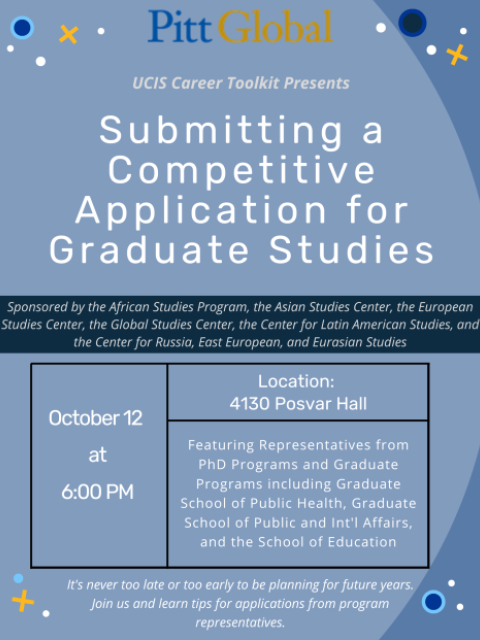
Submitting a Competitive Application for Graduate Studies
Time:
6:00 pm
Presenter:
Multiple
Location:
4130 Posvar Hall
Sponsored by:
Asian Studies Center, Center for African Studies, Center for Latin American Studies, Center for Russian East European and Eurasian Studies, European Studies Center and Global Studies Center
Contact:
Elaine Linn
Contact Email:
eel58@pitt.edu
It's never too late or too early to be planning for future years. Join the six UCIS centers and learn tips for applications from program representatives and faculty decision makers from the Dietrich School A&S, Graduate School of Public Health, Graduate School of Public and International Affairs and the School of Education.
Tuesday, October 11th, 2022
Conversation on Europe: Business after the Fall: Challenges of East German Companies
Time:
12:00 pm
Presenter:
Jan Musekamp, Department of German
Location:
Zoom
Sponsored by:
European Studies Center and European Union Center of Excellence along with Pitt Business, Embassy of the Federal Republic of Germany, Germany on Campus and @germanyinUSA
Contact:
Josephine E Olson
Contact Phone:
4126481715
Contact Email:
jolson@pitt.edu
When thinking of German businesses, we usually mean West German ones. To add nuance to this perspective, this event will focus on two successful East German companies that had to restart after 1989 when Communism fell and the German government privatized thousands of companies. While some did not succeed, the numerous stories of those that thrived are often overlooked.
Moderator: Jan Musenkamp, University of Pittsburgh
Panelist:
Wendy Carlin, University College of London.
Florian Mezger from Carl Zeiss
Students will have to opportunity to question the companies about internship opportunities.
Wednesday, September 28th, 2022
Trump: The Presidency that Changed US History?
Time:
4:30 pm
Presenter:
Carmelo Mesa-Lago and Francisco Rodriguez-Jimenez
Location:
Posvar 4130
Sponsored by:
Center for Latin American Studies and European Studies Center along with Department of Political Science and Department of Economics
What is Donald Trump's personality like? What was his family like? What is his ideology? What have been the highlights of his performance as a businessman, candidate, and head of the government of the most powerful country in the world? These questions require multi-causal answers that go beyond the clichés that have been spread by his defenders, his detractors, and Trump himself. The 45th president of the United States has been both praised and reviled. His personality, his professional career, and his emergence in American and world politics have been the subject of biased and didactic analyses. This book attempts to offer a more nuanced explanation, underpinned by hundreds of articles, books, and interviews on the character and his historical context.
To understand the “Trump phenomenon” it is necessary to analyze its origins, as well as the political, social and economic dynamics of the United States. For better or worse, Trump is not a historical anomaly, but rather a product of his time. However, some of the most controversial actions of his mandate, which put democratic coexistence on the ropes, were largely his responsibility. His style of doing politics is still alive, as are the circumstances that made for his rise to power in 2016. Will he return to the White House in 2024?
Tuesday, September 27th, 2022
"Putin's War in Ukraine: A Shock for Germany"
Time:
3:00 pm
Presenter:
Klau-Dieter Frankenberger
Location:
4130 Posvar Hall
Sponsored by:
European Studies Center along with American Council on Germany
Contact:
Josephine Olson
Contact Phone:
4126481715
Contact Email:
jolson@pitt.edu
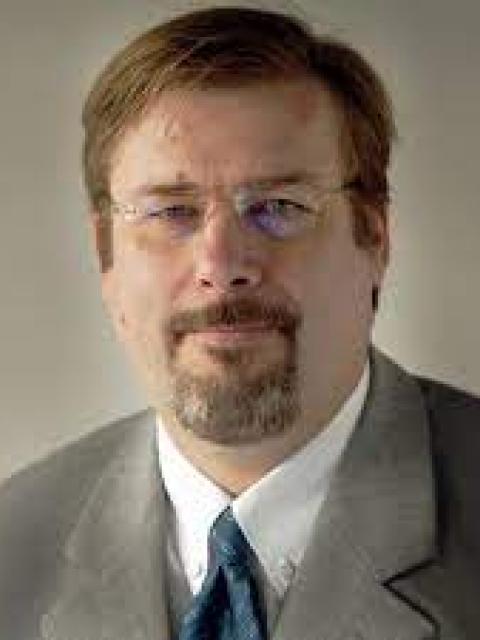
Klaus-Dieter Frankenberger is a German journalist who previously served as the Foreign Editor of the Frankfurter Allgemeine Zeitung. His writing has focused on the United States, European, transatlantic, and international politics. Mr. Frankenberger holds a master’s degree in Political Science, Economics, and American Studies from Frankfurt University. In 1980, he participated in an exchange program with the University of Mississippi. From 1982 to 1985 he was a research associate at the Center for North-American Studies at Frankfurt University. Mr. Frankenberger was a Congressional Fellow in the U.S. House of Representatives from 1985 to 1986 and a Marshall Fellow at Harvard University in 1990. He has lectured at several American universities. In 2011, he was a Bosch Fellow at the Transatlantic Academy in Washington, D.C. Since he joined the Frankfurter Allgemeine Zeitung, Germany’s leading national daily, in 1986, he served in various capacities, as European, International, and Editorial Page Editor. Mr. Frankenberger was a Member of the Trilateral Commission and of the Scientific Council of the Institute for European Politics in Berlin. He also served on the Advisory Board of the Federal Academy for Security Policy in Berlin and is associated with several organizations that deal with the transatlantic relationship.
Friday, September 23rd, 2022
University Center for International Studies Open House
Time:
4:00 pm to 5:30 pm
Presenter:
various
Location:
Pitt Global Hub and Posvar Galleria (1st Floor, Posvar Hall)
Sponsored by:
Asian Studies Center, Center for Ethnic Studies Research, Center for African Studies, Center for Latin American Studies, Center for Russian East European and Eurasian Studies, Director's Office, European Studies Center, European Union Center of Excellence, Global Studies Center, Global Hub, Nationality Rooms and Intercultural Exchange Programs, Office of International Services and Global Experiences Office
Cost:
Free and open to all
Contact Email:
ucis@pitt.edu
Learn more about all that is planned for the 2022-23 academic year by the Asian Studies Center, the Center for African Studies, the Center for Ethnic Studies Research, the Center for Latin American Studies, the Center for Russian, East European, and Eurasian Studies, the European Studies Center, and the Global Studies Center. Celebrate with us the recent award of 12 new federal grants and learn how that money will support faculty and students interested in the world. Find new opportunities to study, research, or teach about the world. This event is open to all faculty and students and is an opportunity to meet others who share similar interests. Representatives from Pitt's Global Experiences Office and Office of International Studies, as well as the Nationality Rooms, will also be on hand.
Tuesday, September 20th, 2022
Conversations on Europe: The UK after Boris
Time:
12:00 pm
Presenter:
Various
Location:
Zoom
Sponsored by:
European Studies Center and European Union Center of Excellence along with Miami-Florida Jean Monnet European Union Center of Excellence, EU Center at the University of Illinois at Urbana-Champagne, Center for European Studies at the University of Florida, Center for European Studies at University of Texas-Austin and Center for European and Transatlantic Studies at Georgia Tech University
Contact:
Ingrid Gomez-O'Toole
Contact Phone:
412-648-8517
Contact Email:
ing7@pitt.edu
Panelist: Tim Bale, Queen Mary University of London, Jane Green, University of Oxford, Robert Ford, University of Manchester and Robert Johns, University of Essex
Moderator: Jae-Jae Spoon, University of Pittsburgh
Sunday, September 18th, 2022
US Wartime Propaganda and Yet "Something Deeply Viennese"
Henry Koerner's transformatve years as a poster artist in WW II
Time:
3:00 pm to 4:30 pm
Presenter:
Dr. Florian Traussnig
Location:
4130 Posvar Hall
Sponsored by:
European Studies Center and Nationality Rooms and Intercultural Exchange Programs
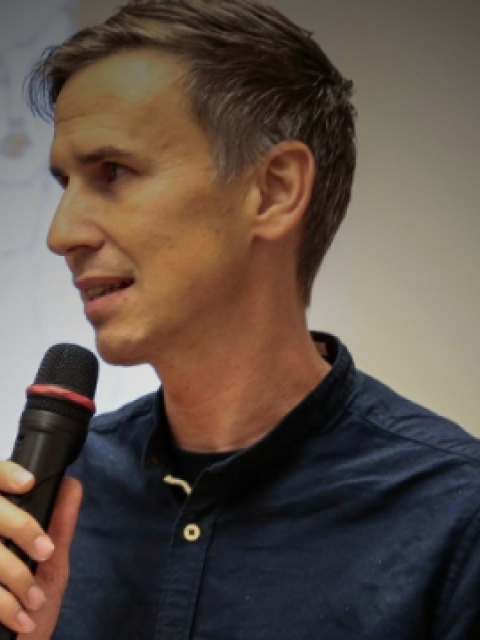
Henry Koerner's transformative years as a poster artist in WWII. Join Dr. Florian Traussnig for an illuminating lecture on the Vienna-born, Jewish refugee Heinrich Sieghart Korner, later Henry Koerner, who created some of the most iconic posters for the US Office of War Information and later became known as a Pittsburgh-based "master of magical realism." Learn how the artist fused the kulturellen Rucksackhe brought from Austria to American art and culture.
REGISTER:
https://pitt.zoom.us/meeting/register/tJctduqoqj0rGtbDhe99CTdiCnu0I65-jkRm
Sponsors:
Austrian Nationality Room Committee
European Studies Center
The OrJames Lab
University of Graz, Austria
Saturday, September 17th, 2022
Celebrate Africa

Time:
11:00 am to 8:00 pm
Location:
Wesley W. Posvar Hall
Sponsored by:
Center for African Studies, Center for Latin American Studies, European Studies Center, Global Studies Center, Global Hub, Nationality Rooms and Intercultural Exchange Programs and UCIS Engagement along with Community Relations, Office of the Provost, Office of Equity, Diversity, and Inclusion, School of Social Work, School of Education, Joseph M. Katz Graduate School of Business, Africana Studies Department, Center for Global Health, Swanson School of Engineering, School of Nursing, Department of French & Italian, Department of Linguistics, Alumni Relations, University Honors College, Graduate School of Public and International Affairs (GSPIA), School of Music, School of Law, Deitrich School of Arts and Sciences and Dean of Students
Cost:
Free
Contact:
Anna-Maria Karnes
Contact Phone:
412-624-8143
Contact Email:
awk19@pitt.edu
Celebrate Africa with the Center for African Studies on September 16th and 17th! Join us on Friday the 16th for a keynote speaker, drumming and dance performances, lectures and roundtables, and Saturday the 17th for an African market with crafts and food and performance by an African band.
Celebrate Africa Festival

Time:
11:00 am to 5:00 pm
Presenter:
Various
Location:
Posvar Patio
Sponsored by:
Center for African Studies, Center for Latin American Studies, European Studies Center, Global Studies Center, Global Hub, Nationality Rooms and Intercultural Exchange Programs and UCIS Engagement along with Community Relations, Office of the Provost, Office of Equity, Diversity, and Inclusion, School of Social Work, School of Education, Joseph M. Katz Graduate School of Business, Africana Studies Department, Center for Global Health, Swanson School of Engineering, School of Nursing, Department of French & Italian, Department of Linguistics, Alumni Relations, University Honors College, Graduate School of Public and International Affairs (GSPIA), School of Music, School of Law, Deitrich School of Arts and Sciences and Dean of Students
Cost:
Free
Contact:
Anna-Maria Karnes
Contact Email:
awk19@pitt.edu
Celebrate Africa culminates in a day-long festival that features a live band, a DJ, a marketplace of African food and craft vendors, and dancing and drum workshops by Camara Drum and Dance. This event has something for everyone. Come try some new food, check out our craft market, listen to African music, and check out colorful African fashions!
Friday, September 16th, 2022 to Saturday, September 17th, 2022
Celebrate Africa!
Panel Discussions, Keynote adress and Cultural Entertainement
Time:
9:07 pm to 5:08 pm
Presenter:
Multiple Presenters: Faculty, Scholars from Africa, Students, and Community
Location:
Posvar Hall and Posvar Patio
Sponsored by:
Center for African Studies, Center for Latin American Studies, European Studies Center, Global Studies Center, Global Hub, Nationality Rooms and Intercultural Exchange Programs and UCIS Engagement along with University Center for International Studies (UCIS), Office of the Provost, Office of Engagement & Community Affairs, Office for Equity, Diversity & Inclusion David C. Frederick Honors College Office of Academic & Global Health The African Heritage Classroom Alumni Affairs School of Nursing Center for Industry Studies, Swanson School of Engineering Center for International Legal Education, Nordenberg Chair and School of Law Institute for International Studies in Education, School of Education Department of Linguistics Department of French & Italian and Union of African Communities in Southwestern Pensylvannia
Contact:
Dr. Anna-Maria Karnes
Contact Phone:
412-624-8143
Contact Email:
Awk19@pitt.edu
The Center for African Studies (CAS) is hosting its inaugural Celebrate Africa Festival from Friday, September 16 to Saturday, September 17, 2022 and you are invited to attend!
On Friday, join scholars and leaders from the African continent and Pitt faculty for a seminar, round table, alumni webinar, documentary screening, reception, and keynote address by renowned pan-African historian Dr. Paul Tiyambe Zeleza.
On Saturday join us for the festival that will bring students, faculty, and staff together with the vibrant diaspora community of Pittsburgh. We’ll gather outside the Posvar Patio to celebrate the many cultures of Africa through music & dance, food, and artisans and children's activities. It will also be a day for networking with African organizations and businesses.
Friday, September 16th, 2022
Celebrate Africa Welcome Reception

Time:
5:00 pm to 8:00 pm
Presenter:
Various
Location:
Cloisters and Auditorium at the Frick Fine Arts Building
Sponsored by:
Center for African Studies, Center for Latin American Studies, European Studies Center, Global Studies Center, Global Hub, Nationality Rooms and Intercultural Exchange Programs and UCIS Engagement along with Community Relations, Office of the Provost, Office of Equity, Diversity, and Inclusion, School of Social Work, School of Education, Joseph M. Katz Graduate School of Business, Africana Studies Department, Center for Global Health, Swanson School of Engineering, School of Nursing, Department of French & Italian, Department of Linguistics, Alumni Relations, University Honors College, Graduate School of Public and International Affairs (GSPIA), School of Music, School of Law, Deitrich School of Arts and Sciences and Dean of Students
Cost:
Free
Contact:
Anna-Maria Karnes
Contact Email:
awk19@pitt.edu
Join the Center for African Studies for an incredible evening!
Our Reception will begin at 5PM.
Ceremonial drumming will begin at 5:30PM.
A keynote address by renowned historian Dr. Paul Zeleza at 6:00PM.
The Future of Foreign Policy in Africa

Time:
4:00 pm to 5:00 pm
Presenter:
Dr. John Stoner of the History Department
Location:
4130 Posvar Hall
Sponsored by:
Center for African Studies, Center for Latin American Studies, European Studies Center, Global Studies Center, Global Hub, Nationality Rooms and Intercultural Exchange Programs and UCIS Engagement along with Community Relations, Office of the Provost, Office of Equity, Diversity, and Inclusion, School of Social Work, School of Education, Joseph M. Katz Graduate School of Business, Africana Studies Department, Center for Global Health, Swanson School of Engineering, School of Nursing, Department of French & Italian, Department of Linguistics, Alumni Relations, University Honors College, Graduate School of Public and International Affairs (GSPIA), School of Music, School of Law, Deitrich School of Arts and Sciences and Dean of Students
Cost:
Free
Contact:
Anna-Maria Karnes
Contact Email:
awk19@pitt.edu
Join the Center for African Studies for this Celebrate Africa seminar with History Professor Dr. John Stoner! Dr. Stoner's research has focused on politics and history in Africa, particularly in South Africa.
Giving Back/ Missing/ Remembering: A Hands-On, Interactive, And Decolonial Synthesis of the State of the Benin Bronzes Held in Cologne's Premier World Culture Museum

Time:
4:00 pm to 5:00 pm
Presenter:
Dr. Maureen K. Porter, Professor of Education
Location:
4217 Posvar Hall
Sponsored by:
Center for African Studies, Center for Latin American Studies, European Studies Center, Global Studies Center, Global Hub, Nationality Rooms and Intercultural Exchange Programs and UCIS Engagement along with Community Relations, Office of the Provost, Office of Equity, Diversity, and Inclusion, School of Social Work, School of Education, Joseph M. Katz Graduate School of Business, Africana Studies Department, Center for Global Health, Swanson School of Engineering, School of Nursing, Department of French & Italian, Department of Linguistics, Alumni Relations, University Honors College, Graduate School of Public and International Affairs (GSPIA), School of Music, School of Law, Deitrich School of Arts and Sciences and Dean of Students
Cost:
Free
Contact:
Anna-Maria Karnes
Contact Email:
awk19@pitt.edu
Join the Center for African Studies for this conversation with Professor of Education Dr. Maureen K. Porter.
The African Immigrant Experience in Pittsburgh: Community Perspectives

Time:
4:00 pm to 5:00 pm
Presenter:
Various
Location:
Global Hub at Posvar Hall
Sponsored by:
Center for African Studies, Center for Latin American Studies, European Studies Center, Global Studies Center, Global Hub, Nationality Rooms and Intercultural Exchange Programs and UCIS Engagement along with Community Relations, Office of the Provost, Office of Equity, Diversity, and Inclusion, School of Social Work, School of Education, Joseph M. Katz Graduate School of Business, Africana Studies Department, Center for Global Health, Swanson School of Engineering, School of Nursing, Department of French & Italian, Department of Linguistics, Alumni Relations, University Honors College, Graduate School of Public and International Affairs (GSPIA), School of Music, School of Law, Deitrich School of Arts and Sciences and Dean of Students
Cost:
Free
Contact:
Anna-Maria Karnes
Contact Email:
awk19@pitt.edu
Join the Center for African Studies to hear from representatives from various Africa diaspora communities in Pittsburgh as they discuss what it means to be an African immigrant in Southwestern Pennsylvania. This panel will speak to the challenges, opportunities, and surprises they have encoutered living in the Pittsburgh area and what they want the greater community to know.
Gender Equity Programming - What Works - Examples From the African Continent

Time:
3:00 pm to 4:00 pm
Presenter:
Dr. Thuy Bui from the School of Medicine and Dr. Martina Anto-Ocrah from the School of Medicine
Location:
4130 Posvar Hall
Sponsored by:
Center for African Studies, Center for Latin American Studies, European Studies Center, Global Studies Center, Global Hub, Nationality Rooms and Intercultural Exchange Programs and UCIS Engagement along with Community Relations, Office of the Provost, Office of Equity, Diversity, and Inclusion, School of Social Work, School of Education, Joseph M. Katz Graduate School of Business, Africana Studies Department, Center for Global Health, Swanson School of Engineering, School of Nursing, Department of French & Italian, Department of Linguistics, Alumni Relations, University Honors College, Graduate School of Public and International Affairs (GSPIA), School of Music, School of Law, Deitrich School of Arts and Sciences and Dean of Students
Cost:
Free
Contact:
Anna-Maria Karnes
Contact Email:
awk19@pitt.edu
Dr. Thuy Bui and Dr. Martina Anto-Ocrah, both from the School of Medicine, will share their experiences conducting gender equity programming throughout Africa, what has worked for them, and why.
Learn Some Phrases in an African Language: Amharic, Swahili, and Arabic

Time:
3:00 pm to 4:00 pm
Presenter:
Dr. Amani Attia from Linguistics, Dr. Meshesha Make from Linguistics, Dr. Filipo Lubua from Linguistics
Location:
Global Hub at Posvar Hall
Sponsored by:
Center for African Studies, Center for Latin American Studies, European Studies Center, Global Studies Center, Global Hub, Nationality Rooms and Intercultural Exchange Programs and UCIS Engagement along with Community Relations, Office of the Provost, Office of Equity, Diversity, and Inclusion, School of Social Work, School of Education, Joseph M. Katz Graduate School of Business, Africana Studies Department, Center for Global Health, Swanson School of Engineering, School of Nursing, Department of French & Italian, Department of Linguistics, Alumni Relations, University Honors College, Graduate School of Public and International Affairs (GSPIA), School of Music, School of Law, Deitrich School of Arts and Sciences and Dean of Students
Cost:
Free
Contact:
Anna-Maria Karnes
Contact Email:
awk19@pitt.edu
As part of Celebrate Africa, Dr. Filipo Lubua, Dr. Meshesha Make, and Dr. Amani Attia, all from the LInguistics Department at Pitt, will hold an interactive, fun roundtable conversation hour teaching some phrases in these three African languages. Come expand your language skills!
The African Woman: A Closer Look At The Daily Life of a Woman in Egpyt, Sudan, and Somalia

Time:
2:00 pm to 3:00 pm
Presenter:
Dr. Amani Attia
Location:
4217 Posvar Hall
Sponsored by:
Center for African Studies, Center for Latin American Studies, European Studies Center, Global Studies Center, Global Hub, Nationality Rooms and Intercultural Exchange Programs and UCIS Engagement along with Community Relations, Office of the Provost, Office of Equity, Diversity, and Inclusion, School of Social Work, School of Education, Joseph M. Katz Graduate School of Business, Africana Studies Department, Center for Global Health, Swanson School of Engineering, School of Nursing, Department of French & Italian, Department of Linguistics, Alumni Relations, University Honors College, Graduate School of Public and International Affairs (GSPIA), School of Music, School of Law, Deitrich School of Arts and Sciences and Dean of Students
Cost:
Free
Contact:
Anna-Maria Karnes
Contact Email:
awk19@pitt.edu
As part of the Celebrate Africa Series, please join Dr. Amani Attia for this discussion of African women in northern and eastern Africa.
Community Engagement: Gathering at the Well or Under the Village Tree

Time:
2:00 pm to 3:00 pm
Presenter:
Dr. Abdesalam Soudi, Department of Linguistics, and Dr. Catherine Koverola, Center for African Studies
Location:
4130 Posvar Hall
Sponsored by:
Center for African Studies, Center for Latin American Studies, European Studies Center, Global Studies Center, Global Hub, Nationality Rooms and Intercultural Exchange Programs and UCIS Engagement along with Community Relations, Office of the Provost, Office of Equity, Diversity, and Inclusion, School of Social Work, School of Education, Joseph M. Katz Graduate School of Business, Africana Studies Department, Center for Global Health, Swanson School of Engineering, School of Nursing, Department of French & Italian, Department of Linguistics, Alumni Relations, University Honors College, Graduate School of Public and International Affairs (GSPIA), School of Music, School of Law, Deitrich School of Arts and Sciences and Dean of Students
Cost:
Free
Contact:
Anna-Maria Karnes
Contact Email:
awk19@pitt.edu
Dr. Abdesalam Soudi of the Department of Linguistics and Dr. Catherine Koverola of the Center for African Studies will discuss community engagement in the African context.
Documentary Film Screening: Keep Quiet or Die

Time:
2:00 pm to 3:30 pm
Presenter:
Aunel Arneth
Location:
1500 Posvar Hall
Sponsored by:
Center for African Studies, Center for Latin American Studies, European Studies Center, Global Studies Center, Global Hub, Nationality Rooms and Intercultural Exchange Programs and UCIS Engagement along with Community Relations, Office of the Provost, Office of Equity, Diversity, and Inclusion, School of Social Work, School of Education, Joseph M. Katz Graduate School of Business, Africana Studies Department, Center for Global Health, Swanson School of Engineering, School of Nursing, Department of French & Italian, Department of Linguistics, Alumni Relations, University Honors College, Graduate School of Public and International Affairs (GSPIA), School of Music, School of Law, Deitrich School of Arts and Sciences and Dean of Students
Cost:
Free
Contact:
Anna-Maria Karnes
Contact Email:
awk19@pitt.edu
Aunel Arneth Kimbembe Makaya is a pro-democracy activist, reporter, director and documentary film producer from the Republic of Congo. He directed "Keep Quiet or Die," a documentary advocating against the crimes committed by Congolese armed forces on civilians during a 2015 referendum vote. The documentary, broadcast by the French NGO Agir Ensemble pour les Droits Humains (AEDH) and the television channel My Media Prime TV, received financial support from the National Endowment for Democracy. Following the release of this film, Aunel was sued in the Republic of Congo and Senegal. As a result, he went into exile in the United States, where he is currently a visiting scholar at the University of Pittsburgh. Aunel will present his film and answer questions from the audience.
Burden of Cancer in Nigeria: Overview of a Low-Resource Setting

Time:
1:00 pm to 2:00 pm
Presenter:
Dr. Abimbola Fapohunda
Location:
4130 Posvar Hall
Sponsored by:
Center for African Studies, Center for Latin American Studies, European Studies Center, Global Studies Center, Global Hub, Nationality Rooms and Intercultural Exchange Programs and UCIS Engagement along with Community Relations, Office of the Provost, Office of Equity, Diversity, and Inclusion, School of Social Work, School of Education, Joseph M. Katz Graduate School of Business, Africana Studies Department, Center for Global Health, Swanson School of Engineering, School of Nursing, Department of French & Italian, Department of Linguistics, Alumni Relations, University Honors College, Graduate School of Public and International Affairs (GSPIA), School of Music, School of Law, Deitrich School of Arts and Sciences and Dean of Students
Cost:
Free
Contact:
Anna-Maria Karnes
Contact Email:
awk19@pitt.edu
As part of the Celebrate Africa conference, Dr. Abimbola Fapohunda will discuss her research and work on cancer in Nigeria.
African Peoples' Struggle

Time:
1:00 pm to 2:00 pm
Presenter:
Dr. Mohammed Bamyeh and Dr. Ronald Judy
Location:
4217 Posvar Hall
Sponsored by:
Center for African Studies, Center for Latin American Studies, European Studies Center, Global Studies Center, Global Hub, Nationality Rooms and Intercultural Exchange Programs and UCIS Engagement along with Community Relations, Office of the Provost, Office of Equity, Diversity, and Inclusion, School of Social Work, School of Education, Joseph M. Katz Graduate School of Business, Africana Studies Department, Center for Global Health, Swanson School of Engineering, School of Nursing, Department of French & Italian, Department of Linguistics, Alumni Relations, University Honors College, Graduate School of Public and International Affairs (GSPIA), School of Music, School of Law, Deitrich School of Arts and Sciences and Dean of Students
Cost:
Free
Contact:
Anna-Maria Karnes
Contact Email:
awk19@pitt.edu
This seminar is part of the Celebrate Africa conference series and features Professors Mohammed Bamyeh of Sociology and Ronald Judy of English.
Pitt Opportunities to Study Abroad Or Intern in Africa and Learn How to Get Your Trip Funded

Time:
1:00 pm to 2:00 pm
Presenter:
Global Experiences Office and Nationality Rooms Staff
Location:
Global Hub at Posvar Hall
Sponsored by:
Center for African Studies, Center for Latin American Studies, European Studies Center, Global Studies Center, Global Hub, Nationality Rooms and Intercultural Exchange Programs and UCIS Engagement along with Community Relations, Office of the Provost, Office of Equity, Diversity, and Inclusion, School of Social Work, School of Education, Joseph M. Katz Graduate School of Business, Africana Studies Department, Center for Global Health, Swanson School of Engineering, School of Nursing, Department of French & Italian, Department of Linguistics, Alumni Relations, University Honors College, Graduate School of Public and International Affairs (GSPIA), School of Music, School of Law, Deitrich School of Arts and Sciences and Dean of Students
Cost:
Free
Contact:
Anna-Maria Karnes
Contact Email:
awk19@pitt.edu
During the Celebrate Africa Event, the Global Experiences and Nationality Rooms Staff will discuss opportunities for study abroad and internships across the African continent for undergraduate and graduate students. They will also explain how Pitt students can fund their trips to Africa and make these incredible experiences affordable!
Changemakers of Africa and the Diaspora: Alumni Showcase

Time:
12:00 pm to 1:00 pm
Presenter:
Dr. Nosakhere Griffin-El, Dr. Fatimah Waziri-Azi, Dr. Mamothena Mothupi
Location:
Global Hub at Posvar Hall
Sponsored by:
Center for African Studies, Center for Latin American Studies, European Studies Center, Global Studies Center, Global Hub, Nationality Rooms and Intercultural Exchange Programs and UCIS Engagement along with Community Relations, Office of the Provost, Office of Equity, Diversity, and Inclusion, School of Social Work, School of Education, Joseph M. Katz Graduate School of Business, Africana Studies Department, Center for Global Health, Swanson School of Engineering, School of Nursing, Department of French & Italian, Department of Linguistics, Alumni Relations, University Honors College, Graduate School of Public and International Affairs (GSPIA), School of Music, School of Law, Deitrich School of Arts and Sciences and Dean of Students
Cost:
Free
Contact:
Anna-Maria Karnes
Contact Email:
awk19@pitt.edu
As part of the Celebrate Africa conference series, hear from Pitt alumni speak about their experiences in African Studies, studying abroad, and how they have used their education to pursue meaningful, rewarding careers. Panelists include:
Dr. Nosakhere Griffin-El, Creator, Dreamocracy Learning Lab in Pittsburgh
Dr. Fatimah Waziri-Azi, Director General in Nigeria, National Agency for Prohibition of Trafficking
Dr. Mamothena Mothupi, Project Director, Maternal & Newborn Health, International Rescue Committee
Celebrate Africa
Time:
11:00 am to 8:00 pm
Location:
Wesley W. Posvar Hall
Sponsored by:
Center for African Studies, Center for Latin American Studies, European Studies Center, Global Studies Center, Global Hub, Nationality Rooms and Intercultural Exchange Programs and UCIS Engagement along with Community Relations, Office of the Provost, Office of Equity, Diversity, and Inclusion, School of Social Work, School of Education, Joseph M. Katz Graduate School of Business, Africana Studies Department, Center for Global Health, Swanson School of Engineering, School of Nursing, Department of French & Italian, Department of Linguistics, Alumni Relations, University Honors College, Graduate School of Public and International Affairs (GSPIA), School of Music, School of Law, Deitrich School of Arts and Sciences and Dean of Students
Cost:
Free
Contact:
Anna-Maria Karnes
Contact Phone:
412-624-8143
Contact Email:
awk19@pitt.edu
Celebrate Africa with the Center for African Studies on September 16th and 17th! Join us on Friday the 16th for a keynote speaker, drumming and dance performances, lectures and roundtables, and Saturday the 17th for an African market with crafts and food and performance by an African band.
Security in Niger: You Can't Look Forward Without Looking Back
Celebrate Africa Conference

Time:
11:00 am to 12:00 pm
Presenter:
Dr. Karin Warner
Location:
4217 Posvar Hall
Sponsored by:
Center for African Studies, Center for Latin American Studies, European Studies Center, Global Studies Center, Global Hub, Nationality Rooms and Intercultural Exchange Programs and UCIS Engagement along with Community Relations, Office of the Provost, Office of Equity, Diversity, and Inclusion, School of Social Work, School of Education, Joseph M. Katz Graduate School of Business, Africana Studies Department, Center for Global Health, Swanson School of Engineering, School of Nursing, Department of French & Italian, Department of Linguistics, Alumni Relations, University Honors College, Graduate School of Public and International Affairs (GSPIA), School of Music, School of Law, Deitrich School of Arts and Sciences and Dean of Students
Cost:
Free
Contact:
Anna-Maria Karnes
Contact Phone:
412-624-8143
Contact Email:
awk19@pitt.edu
As part of the Celebrate Africa event, join the Center for African Studies to hear from Professor of Nursing Karin Warner as she discusses her experience working in the Niger Delta. Dr. Warner will speak to the importance of history to the current security issues in Niger.
Assisting Legal Education in Africa - The Vis Arbitration Moot

Time:
11:00 am to 12:00 pm
Presenter:
Professor Ronald Brand and John Paul Putney
Location:
4130 Posvar Hall
Sponsored by:
Center for African Studies, Center for Latin American Studies, European Studies Center, Global Studies Center, Global Hub, Nationality Rooms and Intercultural Exchange Programs and UCIS Engagement along with Community Relations, Office of the Provost, Office of Equity, Diversity, and Inclusion, School of Social Work, School of Education, Joseph M. Katz Graduate School of Business, Africana Studies Department, Center for Global Health, Swanson School of Engineering, School of Nursing, Department of French & Italian, Department of Linguistics, Alumni Relations, University Honors College, Graduate School of Public and International Affairs (GSPIA), School of Music, School of Law, Deitrich School of Arts and Sciences and Dean of Students
Cost:
Free
Contact:
Anna-Maria Karnes
Contact Email:
awk19@pitt.edu
As part of the Celebrate Africa conference, join the Center for African Studies to hear from Professor of Law Ronald Brand and Pitt Law Alum John Paul Putney about the Vis Arbitration Moot. For over a decade, Professor Brand has worked with the U.S. Department of Commerce to develop law school curricula in international commercial law and arbitration, training students and faculty from schools throughout the Middle East and North Africa.
Immersion Into African Social Work: Challenges To The American Perspective

Time:
11:00 am to 12:00 pm
Presenter:
Dr. Toya Jones, Dr. Tonya Slawinksi, Dr. Yodit Betru
Location:
Global Hub at Posvar Hall
Sponsored by:
Center for African Studies, Center for Latin American Studies, European Studies Center, Global Studies Center, Global Hub, Nationality Rooms and Intercultural Exchange Programs and UCIS Engagement along with Community Relations, Office of the Provost, Office of Equity, Diversity, and Inclusion, School of Social Work, School of Education, Joseph M. Katz Graduate School of Business, Africana Studies Department, Center for Global Health, Swanson School of Engineering, School of Nursing, Department of French & Italian, Department of Linguistics, Alumni Relations, University Honors College, Graduate School of Public and International Affairs (GSPIA), School of Music, School of Law, Deitrich School of Arts and Sciences and Dean of Students
Cost:
Free
Contact:
Anna-Maria Karnes
Contact Email:
awk19@pitt.edu
As part of the Celebrate Africa conference, join Professors of Social Work Dr. Tonya Slawinksi, Dr. Toya Jones, and Dr. Yodit Betru as they discuss their experiences abroad in Kenya and Uganda with the Center for African Studies during the summer 2022. The Center and School of Social Work are working together to increase partnerships with Schools of Social Work in Africa and create more opportunities for social work students to study and work in Africa.
How Industrial Engineers, Trauma Surgeons, Ob/GYNs, And Social Scientists Can Work Together To Solve Wicked Problems in Africa
Celebrate Africa Seminar

Time:
10:00 am to 11:00 am
Presenter:
Dr. Bopaya Bidanda and Dr. Juan Carlos Puyana
Location:
The Global Hub at Wesley W. Posvar Hall
Sponsored by:
Center for African Studies, Center for Latin American Studies, European Studies Center, Global Studies Center, Global Hub, Nationality Rooms and Intercultural Exchange Programs and UCIS Engagement along with Community Relations, Office of the Provost, Office of Equity, Diversity, and Inclusion, School of Social Work, School of Education, Joseph M. Katz Graduate School of Business, Africana Studies Department, Center for Global Health, Swanson School of Engineering, School of Nursing, Department of French & Italian, Department of Linguistics, Alumni Relations, University Honors College, Graduate School of Public and International Affairs (GSPIA), School of Music, School of Law, Deitrich School of Arts and Sciences and Dean of Students
Cost:
Free
Contact:
Anna-Maria Karnes
Contact Phone:
412-624-8143
Contact Email:
awk19@pitt.edu
As part of the Celebrate Africa event, join the Center for African Studies to hear from Dr. Juan Carlos Puyana, MD, Pitt Professor of Surgery, and Dr. Bopaya Bidanda, the Ernest Roth Professor of Industrial Engineering in the Swanson School, as they discuss their cutting-edge work in Kenya building better blood banking systems to save lives.
Thursday, September 15th, 2022
Virtual Visiting Diplomat Program: Let's Talk Belgium
Time:
2:00 pm to 3:30 pm
Presenter:
Honorable Michel Gerebtzoff, Consul General of Belgium in Atlanta
Sponsored by:
European Studies Center and European Union Center of Excellence along with International Studies Consortium of Georgia (ISCOG)
Consul General Gerebtzoff was born in Geneva, Switzerland. He started his career in the private sector as a bioengineer specializing in earth observation before joining the Belgian Ministry of Foreign Affairs in 2005. His roles in foreign affairs have included postings in Switzerland and China, and a role as Deputy Chief of Staff to the Minister of Foreign Affairs in Brussels. Michel took office as Consul General of Belgium in Atlanta on August 1, 2020. He is married and is the father of two daughters.
JOIN US THURSDAY, SEPTEMBER 15, 2022 – 2:00 – 3:30 P. M. (EASTERN TIME)
JOINTLY SPOSORED BY University of Pittsburgh European Studies Center, Reinhardt University, and the International Studies Consortium of Georgia (ISCOG)
Reframing urban and regional 'development' for 'left behind places'
Time:
1:00 pm
Presenter:
Professor Andy Pike, Center for Urban Regional Development Studies, University of Newcastle
Location:
3415 Posvar Hall
Sponsored by:
European Studies Center along with University of Pittsburgh's Urban Studies Program
Contact:
Michael Glass
Contact Email:
glass@pitt.edu
The recent wave of populism has focused attention on ‘left behind’ places as hotspots of discontent. Seeking to remedy their neglect in urban and regional studies, the aim of this paper is to engage with the problems of ‘left behind’ places and to stimulate fresh thinking about alternative approaches. Reflecting the complex and inter-connected issues facing such places, it argues that a new conception is required to address issues of belonging and attachment. The paper outlines the basis of an expanded neo-endogenous development approach, identifying the foundational economy, income and livelihoods, social infrastructures and social innovation as key policy concerns.
Thursday, August 25th, 2022
Global Carnival
Time:
5:00 pm
Sponsored by:
Asian Studies Center, Center for Ethnic Studies Research, Center for African Studies, Center for Latin American Studies, Center for Russian East European and Eurasian Studies, European Studies Center, Global Studies Center, Nationality Rooms and Intercultural Exchange Programs and UCIS Engagement
Join us as we celebrate diverse cultures with Pitt's cultural departments and student organizations along with local Pittsburgh partners.
Thursday, August 4th, 2022
Brussels-Lux Study Tour 2022 Videoconference #2
Week 3
Time:
4:00 pm
Sponsored by:
European Studies Center and European Union Center of Excellence along with University of North Carolina-Chapel Hill
Contact:
Samantha Moik
Contact Email:
smm302@pitt.edu
In this final videoconference, the Week 3 cohort shares the final drafts of their lesson plans and unit modules with each, offering and accepting feedback from their peers.
Wednesday, July 27th, 2022
Brussels-Lux Study Tour 2022 Videoconference #2
Week 2
Time:
4:00 pm
Sponsored by:
European Studies Center and European Union Center of Excellence along with University of North Carolina-Chapel Hill
Contact:
Samantha Moik
Contact Email:
smm302@pitt.edu
In this final videoconference, the Week 2 cohort shares the final drafts of their lesson plans and unit modules with each, offering and accepting feedback from their peers.
Tuesday, July 19th, 2022
Brussels-Lux Study Tour 2022 Videoconference #2
Week 1
Time:
4:00 pm
Sponsored by:
European Studies Center and European Union Center of Excellence along with University of North Carolina-Chapel Hill
Contact:
Samantha Moik
Contact Email:
smm302@pitt.edu
In this final videoconference, the Week 1 cohort shares the final drafts of their lesson plans and unit modules with each, offering and accepting feedback from their peers.
Monday, July 18th, 2022 to Friday, July 22nd, 2022
Summer Institute for Global Educators
The Impact of Global Experiences in Education
Time:
10:00 am to 3:00 pm
Presenter:
various
Location:
Zoom
Sponsored by:
Asian Studies Center, Center for African Studies, Center for Latin American Studies, Center for Russian East European and Eurasian Studies, European Studies Center, Global Studies Center and National Consortium on Teaching About Asia along with College in High School Program, Longview Foundation; U.S. Department of Education, Institute for International Studies in Education and National Resource Center Program (U.S. Department of Education)
The free online Summer Institute for Global Educators, with the support of the Longview Foundation and the National Resource Center Program of the U.S. Department of Education, will allow in-service and pre-service secondary educators in all subject areas to develop courses and lesson plans with enhanced global and regional studies content. Educators from Title I schools are especially encouraged to apply. Online synchronous and asynchronous sessions will include the use of film and media, simulations, games, and technology to enhance global learning and teaching. Pitt College in High School (CHS) teachers will have the opportunity to meet with CHS staff on foregrounding global issues while meeting University and district requirements. Participating Pennsylvania teachers can apply for Act 48 credits.
Sunday, June 26th, 2022 to Sunday, July 3rd, 2022
Brussels-Lux Study Tour 2022
Week 3

Time:
(All day)
Presenter:
various
Location:
Brussels, Belgium
Sponsored by:
European Studies Center and European Union Center of Excellence
Contact:
Samantha Moik
Contact Email:
smm302@pitt.edu
The annual Brussels-Lux Study Tour is a week-long opportunity for educators across the U.S. to learn more about the European Union. With funding from the EU Delegation and the U.S. Department of Education, K-12 educators and faculty teaching at community colleges and minority-serving institutions (Title III- or Title V-eligible) are able to gain first-hand knowledge and experiences to further their understanding of Europe and the European Union.
Monday, June 20th, 2022
World Refugee Day
Time:
4:00 pm to 8:00 pm
Location:
Schenley Plaza
Sponsored by:
Asian Studies Center, Center for African Studies, Center for Latin American Studies, Center for Russian East European and Eurasian Studies, European Studies Center, Global Studies Center, Nationality Rooms and Intercultural Exchange Programs and UCIS Engagement
Sunday, June 19th, 2022 to Sunday, June 26th, 2022
Brussels-Lux Study Tour 2022
Week 2

Time:
(All day)
Location:
Brussels, Belgium
Sponsored by:
European Studies Center and European Union Center of Excellence along with University of North Carolina at Chapel HillCenter for European Studies A Jean Monnet Center of Excellence and Miami-Florida Jean Monnet European Union Center of Excellence
Contact:
Samantha Moik
Contact Email:
smm302@pitt.edu
The annual Brussels-Lux Study Tour is a week-long opportunity for educators across the U.S. to learn more about the European Union. With funding from the EU Delegation and the U.S. Department of Education, K-12 educators and faculty teaching at community colleges and minority-serving institutions (Title III- or Title V-eligible) are able to gain first-hand knowledge and experiences to further their understanding of Europe and the European Union.
Sunday, June 12th, 2022 to Sunday, June 19th, 2022
Brussels-Lux Study Tour 2022
Week 1

Time:
(All day)
Presenter:
various
Location:
Brussels, Belgium
Sponsored by:
European Studies Center and European Union Center of Excellence along with University of North Carolina at Chapel HillCenter for European Studies A Jean Monnet Center of Excellence and Miami-Florida Jean Monnet European Union Center of Excellence
Contact:
Samantha Moik
Contact Email:
smm302@pitt.edu
The annual Brussels-Lux Study Tour is a week-long opportunity for educators across the U.S. to learn more about the European Union. With funding from the EU Delegation and the U.S. Department of Education, K-12 educators and faculty teaching at community colleges and minority-serving institutions (Title III- or Title V-eligible) are able to gain first-hand knowledge and experiences to further their understanding of Europe and the European Union.
Thursday, June 9th, 2022
Brussels-Lux Study Tour 2022 Videoconference #1
Week 3
Time:
4:00 pm
Sponsored by:
European Studies Center and European Union Center of Excellence along with University of North Carolina-Chapel Hill
Contact:
Samantha Moik
Contact Email:
smm302@pitt.edu
This pre-departure videoconference (for the Week 3 cohort) serves to introduce tour facilitators and educators, provide important details and context before arrival in Brussels, and answer any questions educators have before travelling.
Wednesday, June 8th, 2022
Brussels-Lux Study Tour 2022 Videoconference #1
Week 2
Time:
4:00 pm
Sponsored by:
European Studies Center and European Union Center of Excellence along with University of North Carolina-Chapel Hill
Contact:
Samantha Moik
Contact Email:
smm302@pitt.edu
This pre-departure videoconference (for the Week 2 cohort) serves to introduce tour facilitators and educators, provide important details and context before arrival in Brussels, and answer any questions educators have before travelling.
Tuesday, June 7th, 2022
Brussels-Lux Study Tour 2022 Videoconference #1
Week 1
Time:
4:00 pm
Sponsored by:
European Studies Center and European Union Center of Excellence along with University of North Carolina-Chapel Hill
Contact:
Samantha Moik
Contact Email:
smm302@pitt.edu
This pre-departure videoconference (for the Week 1 cohort) serves to introduce tour facilitators and educators, provide important details and context before arrival in Brussels, and answer any questions educators have before travelling.
Tuesday, May 17th, 2022
Christina Fiig | EU Gender Policies in a Context of (Quasi) Permanent Crisis
Time:
3:00 pm
Location:
Zoom
Sponsored by:
European Studies Center along with Jean Monnet in the USA Network and University of Washington Jean Monnet Center of Excellence
Contact:
Philip Lyon
Contact Email:
plyon@uw.edu
Join the Center for West European Studies and the Jean Monnet EU Center to continue the Talking Gender in the EU Lecture Series, with Christina Fiig on "EU Gender Policies in a Context of (Quasi) Permanent Crisis," on May 17, 2022 at 12:00pm PDT/3:00pm ET.
This is presented by the University of Washington Center for West European Studies and the Jean Monnet EU Center.
This is a part of JMintheUS.
#JMintheUS
Monday, May 16th, 2022 to Thursday, May 19th, 2022
ACTFL Institutional Workshops - OPI Assessment
Time:
9:00 am to 3:00 pm
Sponsored by:
Center for Russian East European and Eurasian Studies and European Studies Center along with Less Commonly Taught Languages Center and Summer Language Institute
The American Council on the Teaching of Foreign Languages workshop on Russian and other less commonly taught European languages.
Thursday, May 12th, 2022
ESCape Into a Book: Hamnet
Time:
7:00 pm
Sponsored by:
European Studies Center and European Union Center of Excellence
Contact:
Samantha Moik
Contact Email:
smm302@pitt.edu
Join the European Studies Center at Pitt for a Virtual Book Club to explore recent works by European authors. We will be reading "Hamnet" by Maggie O'Farrell and discussion the book Thursday, May 12. This event is open to all.
Lincoln Elementary School Assemblies
Time:
(All day)
Location:
2 Ralston Place, Pittsburgh, PA 15216
Sponsored by:
Asian Studies Center, Center for African Studies, Center for Latin American Studies, Center for Russian East European and Eurasian Studies, European Studies Center, Global Studies Center, Nationality Rooms and Intercultural Exchange Programs and UCIS Engagement
Presentations and activities shared by UCIS engagement to Lincoln Elementary School students grades K-5 throughout the day.
Thursday, April 28th, 2022
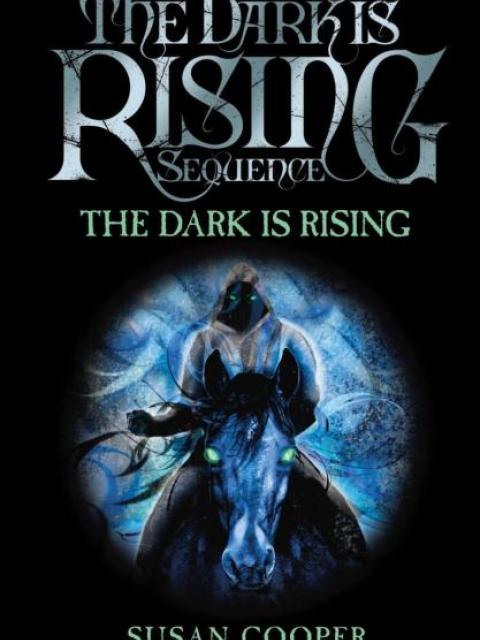
Global Issues Through Literature: The Dark is Rising by Susan Cooper
Global Issues Through Literature
Time:
5:00 pm
Presenter:
Emilee Ruhland
Sponsored by:
European Studies Center and Global Studies Center
Cost:
Free and Open to the Public w/ registration
Contact:
Maja Konitzer
Contact Email:
majab@pitt.edu
Global Issues Through Literature (GILS) Fall and Spring 2021-22: Imagining Other Worlds: Globalizing Science Fiction and Fantasy
April 28th, 2022 - "Dark is Rising" by Susan Cooper. Co-sponsored by the European Studies Center
Facilitated by Emilee Ruhland, who graduated this spring with her Master’s in Critical and Cultural Studies from the University of Pittsburgh, and she holds an MA in English from North Dakota State University. Emilee is a medievalist and has written about Beowulf, Joan of Arc, Notre Dame de Paris, and Gothic architecture in Pittsburgh. She works in higher ed communications, most recently as the Communications Coordinator for the European Studies Center.
This reading group for K-12 educators explores literary texts from a global perspective. Content specialists present the work and its context, and participants brainstorm innovative pedagogical practices for incorporating the text and its themes into the curriculum. Sessions this year will take place virtually on Thursday evenings from 5-8 PM (EST). Books and three Act 48 credit hours are provided.
Register for the reading groups here- https://www.ucis.pitt.edu/global/gils
Contact Maja Konitzer with questions at majab@pitt.edu
Tuesday, April 26th, 2022
"The End of Peace: How Russia’s Invasion in Ukraine is re-making Europe, Russia and the future of transatlantic relations" with Ivan Krastev
Time:
12:00 pm
Location:
Zoom
Sponsored by:
European Studies Center along with CUNY Graduate Center EU Studies Center and Jean Monnet in the USA Network
Contact:
Merrill Sovner
Contact Email:
msovner@gradcenter.cuny.edu
The 2022 Otto and Fran Walter Foundation Memorial Lecture features Ivan Krastev, Permanent Fellow at the Institute for Human Sciences (IWM), Vienna, discussing what the Russian invasion of Ukraine means for the future of Europe, Russia and transatlantic relations.
This is presented by the CUNY Graduate Center's EU's Studies Center.
This is a part of the JMintheUS.
#JMintheUS
Friday, April 22nd, 2022
EV: Plugging into the Future
Time:
12:00 pm
Presenter:
John Helveston, Marianne Ryghaug, Maciej Mazur
Location:
online via Zoom
Sponsored by:
Asian Studies Center, Center for Russian East European and Eurasian Studies, European Studies Center and UCIS Engagement
How have the electric vehicle markets evolved in Europe and Asia in the past decade? How do these changes impact energy choices and consumption in the 21st century? Join us as we explore these questions and more in our BETH series on Energy.
Speakers: Dr. John Helveston, George Washington University; Dr. Marianne Ryghaug, Norwegian University of Science and Technology, Dr. Maciej Mazur, AVERE--The European Association for Electromobility.
Register at https://tinyurl.com/PittElectric
Thursday, April 21st, 2022
International Relations Club Trivia and Elections
Time:
8:00 pm to 9:00 pm
Location:
Global Hub - 1st Floor Posvar
Sponsored by:
Center for Russian East European and Eurasian Studies, European Studies Center and Global Hub
Contact:
Daniel Turillo
Contact Email:
djt59@pitt.edu
For their final event of the year, the International Relations Club will hold officer elections and play international relations-themed trivia.
MEET EU Expert Career Panel: Young Professional Share their Experiences: Working in a European Context
Time:
2:00 pm
Sponsored by:
European Studies Center
This panel, made up of young professionals, provides first-hand experiences from the student perspective regarding European work settings, including legal, cultural, and other human resources differences.
PANELISTS
• Alex Alibrandi FIU Alumni
Sales and Marketing Associate Bozzuto Group
Juan Debesa
FIU Alumni
Graduate Student
Master of Science in Information & Communications Technology
at University of Denver
• Ian Schreiber-Altamirano FIU Alumni
Renewal Manager at DocuSign
MBA Candidate at Nova Southeastern University
• Isabella Venturini FIU Alumni
Graduate Student
Master in Security Studies Program
at Georgetown University
MODERATOR
Renata Urban
Intercultural Coach, Language, and Communication Skills Trainer URBAN Training and Services, Inc.
Wednesday, April 20th, 2022
Conversations on Europe: The French Election: What is at Stake?

Time:
12:00 pm
Sponsored by:
European Studies Center along with Jean Monnet in the USA Network, Center for European Studies at the University of Florida, Center for European and Transatlantic Studies at Georgia Tech University, European Union Center at the University of Illinois, Center for European Studies at University of Texas-Austin and Miami-Florida Jean Monnet European Center of Excellence at Florida International University
Contact:
Kenny Reilly
Contact Email:
ker104@pitt.edu
On April 10th, France will hold a presidential election putting ideologies, personalities, and the future of France on the ballot. A run-off will be held on April 24th if no one secures a majority. The last Conversations on Europe for the 2021-22 academic year will focus on the ramifications of this election's outcome, how Russia's invasion of Ukraine will impact the election, and how this can shape the next decade not only of France but of Europe as a whole.
Panelists:
Jean Beaman, University of California Santa Barbara
Arthur Goldhammer, Center for European Studies, Harvard University
Philippe Marliere, University College London
Moderated by Jae-Jae Spoon, University of Pittsburgh
Thursday, April 14th, 2022
Willem Noe - A Career as a Dutch Economist at the European Commission--Working for Europe
Time:
12:45 pm
Presenter:
Willem Noe
Location:
Zoom
Sponsored by:
Center for Russian East European and Eurasian Studies and European Studies Center
In this brief presentation, Willem Noe, European Commission Official and former EU Fellow at GSPIA, will give a brief overview of working at the European Commission as an international organization, and his own career path as an economist at the Commission dealing with globalization, European Union Enlargement (entry of new Member States into the EU), and the economies of several Member States. He is currently stationed at the EC Representation in Ireland, where he closely follows the Irish economy and the impact of Brexit on Ireland, and acts as a liaison between government, civil society, and the EC Country Team Ireland in Brussels.
View the poster: https://www.ucis.pitt.edu/creees/sites/default/files/images/documents/RE...
Register Here: https://pitt.zoom.us/meeting/register/tJwsdu6urzkpHNWK_cVUxGX2Ow1F-JSLOv...
Wednesday, April 13th, 2022
Rereading Russian Energy Chains Under the Thunder of War
Time:
12:30 pm
Presenter:
Margarita Balmaceda
Location:
Zoom
Sponsored by:
Center for Russian East European and Eurasian Studies and European Studies Center
This keynote event is part of the European and Eurasian Undergraduate Research Symposium 2022.
In this presentation Professor Balmaceda will revisit the burning question of how global, more specifically Europe's dependency on Russian fossil fuel chains has affected international responses to Ukraine's security. Her latest book, Russian Energy Chains: The Remaking of Technopolitics from Siberia to Ukraine to the European Union, sheds light on how Russia's fossil fuel exports have created what now seems like more of a threat than an opportunity for all parties involved. In her book, Professor Balmaceda follows the geopolitical journey of three fossil fuel molecules from production in Siberia to processing and transit in Ukraine, to final use in Germany, while giving us invaluable insight into the moving forces behind the politics and economics surrounding fossil fuels.
View the Poster: https://www.ucis.pitt.edu/creees/sites/default/files/images/documents/RE...
Register to attend: https://pitt.zoom.us/meeting/register/tJwsdu6urzkpHNWK_cVUxGX2Ow1F-JSLOv...
Navigating Remote Work within a Global Organization
Time:
12:00 pm to 1:00 pm
Presenter:
Emily Olmstead
Location:
Virtual Format - Zoom
Sponsored by:
Asian Studies Center, Center for African Studies, Center for Latin American Studies, Center for Russian East European and Eurasian Studies, European Studies Center and Global Studies Center
Contact:
Angela Illig
Contact Phone:
4127267230
Contact Email:
ami17@pitt.edu
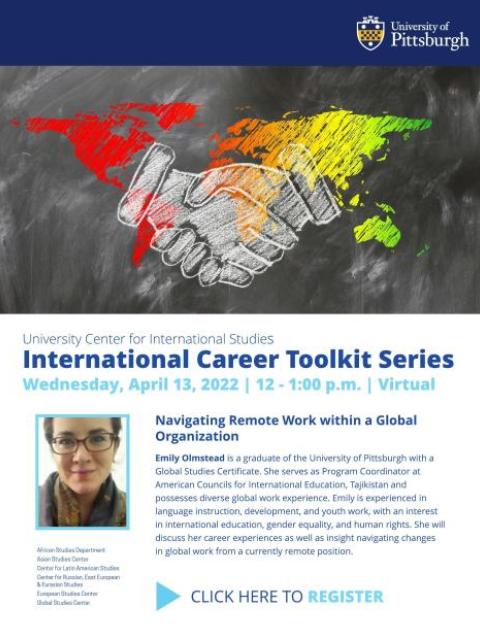
Emily Olmstead is a graduate of the University of Pittsburgh with a Global Studies Certificate. She serves as Program Coordinator at American Councils for International Education, Tajikistan and possesses diverse global work experience. Emily is experienced in language instruction, development, and youth work, with an interest in international education, gender equality, and human rights. She will discuss her career experiences as well as insight navigating changes in global work from a currently remote position.
To Register:
https://pitt.zoom.us/meeting/register/tJUpf-Crqj4jHNfcF98DJhdvp2ihDYLi5W5F
Tuesday, April 12th, 2022
Afro-sonic Phonographies and Disabled Worldmaking
Time:
3:30 pm
Presenter:
Dr. Cae Joseph-Masséna
Sponsored by:
Center for Latin American Studies and European Studies Center
Dr. Joseph-Masséna will present excerpts from her book manuscript Voicing Vodou: Haitian Women Writers and the Goddess Ezili. Her project highlights a previously unidentified literary genre created by three Haitian women writers which she calls “The Eziliphonic text. ”The term “eziliphonic” is a neologism which combines the name of feminine vodou deity “Ezili'' with the adjective “phonic,” referring to “voice” or “speech sound.” The book centers Haitian Women writers as theorists by demonstrating how, within this collectively created literary genre, they effectively rehabilitate vodou culture through their textualization of the feminine deity Ezili, while also centering voice and sound, not vision, as a critical category of the vodou imaginary. There are many iterations of Ezili spirits or lwas in Haitian vodou, but the ones studied here are Ezili Freda, the flirtatious mulatta and lover of all things beautiful, and Ezili Danto, the passionate dark-skinned single mother and fierce defender of her children. Each chapter draws on an interdisciplinary framework, grounded in Black feminist theory, Voice Studies, literary criticism, and Vodou Studies in order to show how Haitian women novelists mobilize Ezili’s vocal, or phonic, specificities in their narratives.
In preparation for the session, students will get acquainted with Jacques Stéphen Alexis’ Réalisme merveilleux or Frankétienne’s Spiralisme. Then, they will read passages from Omise'eke Natasha Tinsley’s Ezili's Mirrors (2018) and Christina Elizabeth Sharpe’s In the Wake: On Blackness and Being (2016). They will also listen to a selection of jazz music.
Dr. Cae Joseph-Masséna is an Assistant Professor of Comparative, Cultural and Francophone studies in the department of Modern Literature & Languages at the University of Miami. Her recent work focuses on contemporary Haitian women writers. A trained Jazz Vocalist and Berklee College of Music alumnus, her research focuses more broadly on the entanglement of voice, music, ritual and sound in Black women’s literary texts. Her research areas include comparative approaches to African diasporic literatures of the francophone Atlantic with an emphasis on Sound/Voice Studies, Haitian Studies and feminist queer of color critique.
POSTPONED!! - The Governance of Antibiotics in Europe

Time:
12:15 pm
Location:
Posvar 4130
Sponsored by:
European Studies Center and Global Studies Center along with Department of Political Science
Contact:
Kenneth Reilly
Contact Email:
ker104@pitt.edu
POSTPONED!!
Antimicrobial resistance (AMR) is a leading cause of death around the world, with the highest burdens in low-resource settings, and is expected to grow exponentially to cause around 10 million deaths annually in 2050. It is defined by high degrees of complexity given its international, multisectoral, ‘one health’ and ‘creeping’ features, which creates significant challenges for good governance. In addition, only 0,5% of all AMR related research comes from the social sciences, which indicates that we know relatively little about the behavioral and institutional aspects of antibiotics. It is also typically referred to as a low-salient political issue. This talk will introduce three dimensions of European governance of antibiotics; first, how experts, typically top senior bureaucrats, create an ‘administrative action space’ when politicians fail to raise the issue; second, the networking dynamics among domestic bureaucracies to create collaborative governance; and thirdly, the role and function of the EU Commission to act as a third-party enforcer in solving the large-scale collective action dilemma of AMR.
Daniel Carelli is a PhD Candidate in political science at the University of Gothenburg. His dissertation investigates how administrative traditions and bureaucratic autonomy affect inter-bureaucratic collaboration around the issue of antimicrobial resistance in Europe.
Monday, April 11th, 2022
Euro Challenge

Time:
9:00 am
Sponsored by:
European Studies Center and European Union Center of Excellence along with W!SE
Contact:
Samantha Moik
Contact Email:
smm302@pitt.edu
The Euro Challenge is a competition for high school students on European economic and monetary policy. It gives participants the opportunity to learn about the Euro, the single market, and other important concepts central to the European Union and macro/microeconomics.
Monday, April 11th, 2022 to Thursday, April 14th, 2022
Undergraduate Research Symposium
Time:
(All day)
Location:
Zoom
Sponsored by:
Center for Russian East European and Eurasian Studies and European Studies Center along with Graduate Organisation for the Study of Europe and Central Asia and Kenneth P. Dietrich School of Arts and Sciences
Contact:
Trevor Erlacher
Contact Email:
tfe3@pitt.edu
The Undergraduate Research Symposium is an annual event since 2002 designed to provide undergraduate students, from the University of Pittsburgh and other colleges and universities, with advanced research experiences and opportunities to develop presentation skills. The event is open to undergraduates from all majors and institutions who have written a research paper from a social science, humanities, or business perspective focusing on the study of Eastern, Western, or Central Europe, the European Union, Russia, or Central Eurasia.
After the initial submission of papers, selected participants are grouped into panels according to their research topics. The participants then give 10- to 15- minute presentations based on their research to a panel of faculty and graduate students. The presentations are open to the public.
Visit the website at ucis.pitt.edu/crees/urs
Apply here by January 7, 2022: https://docs.google.com/forms/d/e/1FAIpQLSd-jrnDiSkgRpr81fKHzQQMXm3E2UN3...
Friday, April 8th, 2022
Tartan Week 2022 - Innovation Scotland
Time:
3:30 pm to 4:15 pm
Location:
Scottish Nationality Room, Cathedral of Learning
Sponsored by:
European Studies Center and Nationality Rooms and Intercultural Exchange Programs along with Edify, Sister Cities International (SCI) and Scottish Business Network
Contact:
Molly McSweeney
Contact Email:
mcm206@pitt.edu
Join us for a presentation live on April 8 from the Scottish Nationality Room celebrating the Tartan Week 2022!
This free event will celebrate Scottish heritage in the Pittsburgh region, promote the new Glasgow Sister City initiative and showcase Scottish innovation!
Speakers:
- Neil Owen (Host, Scottish Business Network)
- Kathy Risko (Sister Cities International)
- Fergus Bruce (Edify.ac)
- Bill McShane, Associate Director for Integrated Learning at the University of Pittsburgh Joseph M. Katz Graduate School of Business & Scottish Nationality Room Secretary
Co-Sponsors:
- University Center for International Studies
- Nationality Rooms and Intercultural Exchange Programs
- European Studies Center
- Scottish Nationality Room
- Scottish Business Network
- Sister Cities International (SCI)
- Edify
In-Person: Scottish Nationality Room, Cathedral of Learning, Room #139, First Floor, 4200 Fifth Avenue, Pittsburgh, PA, 15260
Please note, in-person capacity is limited and will be offered to the first registrants to select that they plan to attend in-person.
Effective March 28, the University has announced that masks are optional indoors. Further information can be found at the Power of Pitt: Building a Healthy and Resilient Community: https://www.coronavirus.pitt.edu/healthy-community/pitts-health-rules
If you are attending this event in-person, parking is available on-street or in Soldiers and Sailors parking garage.
A small reception will take place in the Schenley Croghan Room following the event.
Virtual: Please indicate that you plan to attend virtually when registering via Eventbrite. The virtual meeting link will be sent prior to the date of the event.
Wednesday, April 6th, 2022
Expansion and No End? How EU Expansion Kept Changing the Nature of the Union
Time:
12:30 pm
Sponsored by:
European Studies Center
Contact:
Kenneth Reilly
Contact Email:
ker104@pitt.edu
Professor Daniel Thomas (University of Leiden) joins Pitt Professor Gregor Thum (History) for a discussion of his recent work entitled "The Limits of Europe: Membership Norms and the Contestation of Regional Integration" and how it outlines the potential expansion of the European Union and what it means to be a member of Europe.
Please register using the following link: https://www.eventbrite.com/e/302753522937
Great Expectations? The role of universities as civic anchors in place-based innovation
Time:
11:00 am
Location:
Posvar 4217
Sponsored by:
European Studies Center and Global Studies Center along with Urban Studies Program and the University Center for Social and Urban Research
Recent decades have seen increasing demands from policy makers for publicly funded universities to be proactive drivers of innovation and development in the places in which they are located, particularly in less developed or peripheral regions. This has led to a resurgence of interest in concepts such as the civic university in understanding the contributions universities might make to local social and economic development. This research explores, and culminates in challenging, many of the orthodoxies underpinning the policy rhetoric around the role of universities as civic anchors. It contends that a more realistic, honest understanding of the limitations of universities’ contribution as local civic anchors coupled with a more nuanced and context sensitive approach to policy design might lead to more mutually beneficial outcomes for them and the places in which they are located.
Lecture by Dr. Louise Kempton, Newcastle University